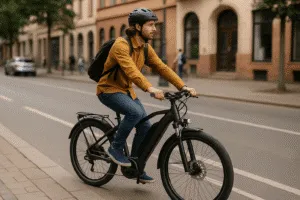
The best electric bike for kids should offer manageable power, reliable braking, adjustable speed settings, and a comfortable riding position. However, finding the right bike depends on your child’s age, size, riding experience, and your budget.
We tested 28 kids’ electric bikes and selected the 14 best electric bikes for kids in 2026, covering different age groups, riding abilities, and budgets.
Some of the links on this site are affiliate links. This means we may earn a commission if you make a purchase through them, at no extra cost to you.
Top Electric Bikes for Kids: Quick Comparison
Not every kids’ electric bike serves the same purpose. Here’s a quick comparison of our top 14 picks to help you narrow down your options based on your child’s age, riding ability, and your budget.
| Electric Bike | Best For | Listed Age | Motor Power | Top Speed | Rated Range/Runtime |
|---|---|---|---|---|---|
| STACYC 12eDRIVE | Best overall for young riders | 3–5 years | Not specified | 9 mph | 60 minutes |
| Hiboy BK1 | Parents on a tight budget | 3–5 years | 150W peak | 9 mph | 4.9 miles |
| Hiboy DM14 | Older, experienced off-road riders | 8–14 years | 750W peak | 20 mph | 38 miles |
| Gyroor S1 | Preschoolers with basic riding skills | 3–6 years | 200W | 10 mph | Not specified |
| Razor MX350 | Traditional dirt bike riding | 8+ years | Not specified | 14 mph | 60 minutes |
| ECOLEAP K1 | Affordable off-road riding | 3–8 years | 700W peak | 16 mph | 14 miles |
| isinwheel A14 | Riding on grass, dirt, and uneven terrain | 5–14 years | 750W | 17 mph | 14 miles |
| ARBELI RadTrail | Gradual speed progression | 6–12 years | 700W peak | 15.5 mph | 13.7 miles |
| ECOLEAP K2 | High performance in a compact frame | 4–9 years | 750W peak | 19.8 mph | 18 miles |
| RFN 12 Basic | Older toddlers and small riders who need a low seat | 3–6 years (confirm by model) | 170W peak | 8.1 mph | 7.5 miles |
| AIII Balance Bike | Quick charging and easy battery removal | Verify by model | 150W | 10 mph | 40–60 minutes |
| ANPABO BMW R18 | Low-speed riding with training wheels | 6–12 years | 300W peak | 13 mph | 12 miles |
| AVDLBIKE A13 | Older teenagers who want pedal assistance | Teens and adults | 500W | 20 mph | 45 miles |
| HYPER GOGO | Kids who enjoy classic motorcycle styling | Height-based fit | Not specified | 10 mph | 60 minutes |
Best Electric Bikes for Kids in 2026: Our Top Picks
- Best Overall Electric Bike for Kids: STACYC 12eDRIVE
- Best Budget Electric Bike for Kids: Hiboy BK1
- Best Electric Dirt Bike for Older Kids: Hiboy DM14
- Best Electric Balance Bike for Preschoolers: Gyroor S1
- Best Traditional Electric Dirt Bike: Razor MX350 Dirt Rocket
- Best Affordable Electric Dirt Bike: ECOLEAP K1
- Best Electric Bike for Mixed Terrain: isinwheel A14
- Best Electric Dirt Bike for Gradual Speed Progression: ARBELI RadTrail
- Best High-Performance Compact Electric Dirt Bike: ECOLEAP K2
- Best Electric Bike for Toddlers: RFN 12 Basic
- Best Affordable Quick-Charging Electric Balance Bike: AIII
- Best Electric Bike for Kids With Training Wheels: ANPABO BMW R18
- Best Electric Bike for Teenagers: AVDLBIKE A13
- Best Cruiser-Style Electric Bike for Kids: HYPER GOGO
1. Best Overall Electric Bike for Kids: STACYC 12eDRIVE
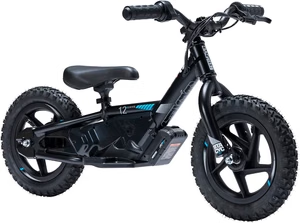
Key Specifications:
- Recommended age: 3–5 years
- Speed modes: 5, 7, and 9 mph
- Riding time: Up to 60 minutes
- Bike weight: 17 lbs
- Maximum rider weight: Under 75 lbs
The STACYC 12eDRIVE earns our top spot as the best ebike for kids because of its lightweight construction and progressive learning system. Unlike many battery-powered bikes for children, it features a non-powered mode that allows kids to practice pushing, balancing, and coasting before introducing motor assistance.
One thing we particularly like about the STACYC is how much attention goes into keeping the weight down. The TIG-welded aluminum frame brings the total weight to just 17 lbs, including the battery. This makes the bike easier for a small rider to reposition and manage than heavier steel-framed alternatives.
Its three speed modes of 5, 7, and 9 mph allow gradual progression for children who are ready for powered riding. We’re also impressed by the removable battery, which takes just 30–60 minutes to recharge. It’s a premium electric balance bike with a price to match, but the thoughtful design makes it our favorite.
Pros:
- Lightweight, 17-lb aluminum construction.
- Non-powered mode for developing balance.
- Three progressively spaced speed settings.
- Removable battery with fast charging.
Cons:
- Significantly more expensive than competing balance bikes.
- Children may quickly outgrow its 12-inch wheels.
2. Best Budget Electric Bike for Kids: Hiboy BK1
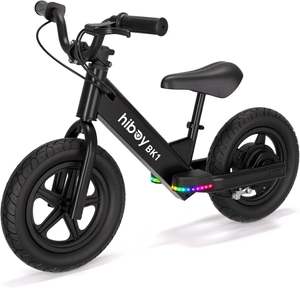
Key Specifications:
- Recommended age: 3–5 years
- Motor: 100W rated, 150W peak
- Speed modes: 5.6 and 9 mph
- Maximum range: 4.9 miles
- Bike weight: 20.06 lbs
If you’re looking for the best kids electric bike on a tight budget, the Hiboy BK1 gets the basics right without costing a fortune. Its modest 100W motor, compact frame, and 12-inch tires offer a simpler alternative to the more powerful electric motorcycles on our list.
The kick-to-start mechanism is a feature our team particularly appreciates. It requires the child to push off the ground before engaging the motor, encouraging them to establish some balance first. The seat also adjusts from 17.2 to 19.1 inches, providing extra room as the rider grows.
The 21.6V 2.6Ah battery provides a rated range of 4.9 miles, which limits longer riding sessions. Charging takes three to four hours, considerably longer than the STACYC. Still, for parents looking for a budget-friendly kids’ electric balance bike for short, supervised rides, the BK1 offers good value.
Pros:
- Affordable price for a first electric balance bike.
- Practical kick-to-start mechanism.
- Adjustable seat height.
- Compact frame with manageable weight.
Cons:
- Limited battery range of 4.9 miles.
- Only two available speed modes.
3. Best Electric Dirt Bike for Older Kids: Hiboy DM14
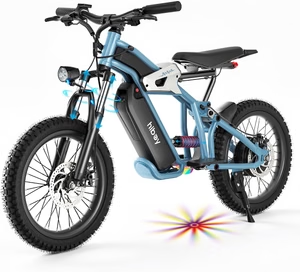
Key Specifications:
- Recommended age: 8–14 years
- Motor: 500W rated, 750W peak
- Speed modes: 8, 15, and 20 mph
- Battery: 48V 9Ah lithium-ion
- Maximum range: 38 miles
The Hiboy DM14 is one of the most capable kids’ electric dirt bikes in our selection. Its 500W brushless motor delivers up to 750W of peak power, while the large 18-inch pneumatic tires make it better equipped for uneven ground than smaller 12-inch models.
What stands out to our team is the braking and suspension setup. Hiboy combines front and rear mechanical disc brakes with electronic braking, giving the DM14 a more comprehensive stopping system than many competing dirt bikes. The front and rear suspension also help manage bumps on rough surfaces.
Its 432Wh battery is another major advantage. However, the advertised 38-mile range comes from riding at 8 mph with a 100-lb rider. Higher speeds and rougher terrain will reduce that figure. With a maximum speed of 20 mph, we’d reserve this electric dirt bike for appropriately aged, experienced riders rather than beginners.
Pros:
- Powerful brushless motor with 750W peak output.
- Large 432Wh battery.
- Front and rear disc brakes with electronic braking.
- Dual suspension and large off-road tires.
Cons:
- Minimum powered speed of 8 mph is relatively high.
- Expensive compared with smaller kids’ dirt bikes.
4. Best Electric Balance Bike for Preschoolers: Gyroor S1
Key Specifications:
- Recommended age: 3–6 years
- Motor: 200W rear hub motor
- Speed modes: 6, 8, and 10 mph
- Tires: 12-inch pneumatic tires
- Brakes: Rear drum brake
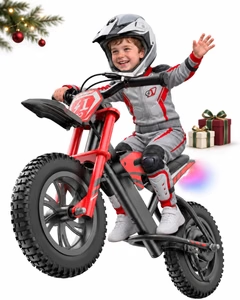
The Gyroor S1 is a compact electric balance bike for young children who like motorcycle-inspired styling. It combines a low steel frame with a 200W rear hub motor, offering more motor power than the Hiboy BK1 without moving into full-sized electric dirt bike territory.
We like the spacing between its three speed settings. Moving from 6 to 8 and then 10 mph provides smaller speed increases than several other kids’ e-bikes we reviewed. However, we’d prefer an even slower introductory mode, especially for preschool-age riders.
The 12-inch pneumatic tires offer some cushioning on uneven surfaces, and the enclosed rear drum brake keeps the braking mechanism relatively protected. Gyroor also includes an LED display and a seven-color taillight. It’s a reasonably priced option for eligible young riders, although children still learning basic balance should start with a non-powered bike.
Pros:
- Three progressively spaced speed modes.
- Low frame for easier mounting.
- Low-maintenance rear hub motor.
- Air-filled tires for additional cushioning.
Cons:
- Minimum powered speed of 6 mph may be too fast for beginners.
- Battery capacity and maximum range are unclear.
5. Best Traditional Electric Dirt Bike: Razor MX350 Dirt Rocket
Key Specifications:
- Listed age: 8 years and older
- Maximum speed: 14 mph
- Battery: 24V sealed lead-acid
- Riding time: Up to 60 minutes in low mode
- Tires: 12-inch pneumatic tires
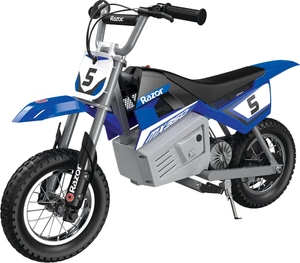
The Razor MX350 Dirt Rocket is a good choice for families looking for a traditional electric dirt bike for kids without unnecessary electronic features. It uses a high-torque, chain-driven motor, a twist-grip throttle, and a scaled-down motocross frame that resembles a conventional dirt bike.
One detail we appreciate is the adjustable-angle riser handlebars. Parents can make small adjustments to better suit their child’s riding position. The 12-inch spoked wheels and knobby pneumatic tires are also well matched to grass and dirt surfaces.
Compared with newer battery-powered dirt bikes, the MX350 feels somewhat dated in its component selection. Its 24V sealed lead-acid battery is heavier than a comparable lithium-ion setup, and the chain requires periodic adjustment and lubrication. Nevertheless, its straightforward design makes it an appealing option for experienced young riders who meet the manufacturer’s requirements.
Pros:
- Traditional motocross-style frame.
- Adjustable-angle handlebars.
- High and low speed settings.
- Knobby pneumatic tires for off-road riding.
Cons:
- Heavy sealed lead-acid battery system.
- Chain drive requires regular maintenance.
6. Best Affordable Electric Dirt Bike: ECOLEAP K1
Key Specifications:
- Listed age: 3–8 years
- Motor: 700W peak
- Speed modes: 6, 9, and 16 mph
- Battery: 36V 5.2Ah lithium-ion
- Maximum range: 14 miles
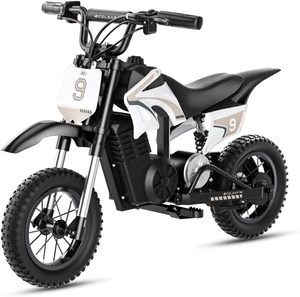
The ECOLEAP K1 offers an impressive set of components for parents shopping for an affordable electric dirt bike for kids. Its 700W peak motor, dual suspension, and reinforced frame give it several features we would expect from more expensive models.
We particularly like the inverted front fork and rear shock absorber. Having suspension at both ends can make a noticeable difference when riding across uneven ground. The 187.2Wh lithium battery also offers up to 120 minutes of rated riding time in the lowest speed mode, compared with 60 minutes in high mode.
At 36 lbs, the K1 is considerably heavier than a children’s electric balance bike. Although ECOLEAP lists it for ages 3–8, we wouldn’t recommend a 700W peak dirt bike capable of reaching 16 mph for very young beginners. The difference between its 9 mph and 16 mph settings also deserves parents’ attention.
Pros:
- Competitive price for its motor and suspension setup.
- Inverted front fork and rear shock absorber.
- Three selectable speed modes.
- Up to two hours of rated low-speed riding time.
Cons:
- Long charging time of five to six hours.
- Relatively heavy for younger children.
7. Best Electric Bike for Mixed Terrain: isinwheel A14
Key Specifications:
- Listed age: 5–14 years
- Motor: 750W
- Speed modes: 5, 8, and 17 mph
- Maximum range: 14 miles
- Weight capacity: 176 lbs
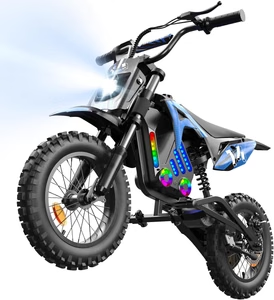
The isinwheel A14 is a versatile kids’ electric dirt bike that sits between compact 12-inch models and larger youth motorcycles. Its 14-inch deep-tread pneumatic tires are designed for riding across grass, dirt, and uneven paths.
Our team particularly likes the combination of front air suspension and rear spring suspension. Larger wheels can roll over small obstacles more easily, while the suspension helps manage impacts from rough ground. The dual braking system is another welcome addition given the bike’s 750W motor.
One practical feature that parents may appreciate is the key-start system, which can help prevent unauthorized use. The A14 also includes an LCD, LED headlight, Bluetooth connectivity, and colored speed-mode indicators. Our main concern is the considerable jump from 8 to 17 mph, making its highest setting unsuitable for inexperienced riders.
Pros:
- Large 14-inch deep-tread pneumatic tires.
- Front air and rear spring suspension.
- Dual braking system.
- Key-start system and speed-mode indicators.
Cons:
- Large speed increase between medium and high modes.
- Battery capacity is not clearly specified.
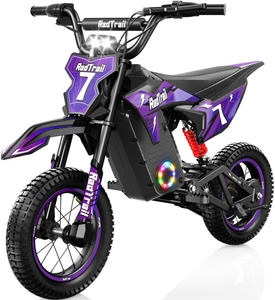
8. Best Electric Dirt Bike for Gradual Speed Progression: ARBELI RadTrail
Key Specifications:
- Listed age: 6–12 years
- Motor: 700W peak
- Speed modes: 5, 7.5, and 15.5 mph
- Maximum range: 13.7 miles
- Weight capacity: 150 lbs
Finding a kids’ electric bike with adjustable speed settings is relatively easy, but finding one with two useful lower-speed modes is another matter. The ARBELI RadTrail offers 5 and 7.5 mph settings before reaching its maximum speed of 15.5 mph.
What we appreciate about this setup is that riders don’t have to move straight into double-digit speeds when progressing beyond the lowest setting. The carbon steel frame, 12-inch all-terrain pneumatic tires, and front and rear suspension also make it a well-equipped dirt bike for its price.
The 36V lithium battery provides up to 100 minutes of rated riding time and takes four to five hours to recharge. We’d prefer a disc braking system on a dirt bike with this level of motor power. Still, the RadTrail’s two lower-speed settings are a useful feature for parents of eligible riders developing their off-road skills.
Pros:
- Two relatively low introductory speed settings.
- Front and rear suspension.
- Up to 100 minutes of rated riding time.
- Reasonable price for a 700W peak dirt bike.
Cons:
- Drum brakes instead of disc brakes.
- Significant speed increase from medium to high mode.
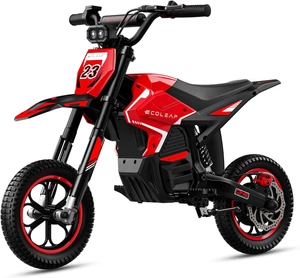
9. Best High-Performance Compact Electric Dirt Bike: ECOLEAP K2
Key Specifications:
- Motor: 750W peak brushless hub motor
- Speed modes: 10, 16, and 19.8 mph
- Maximum range: 18 miles
- Bike weight: 41.89 lbs
- Weight capacity: 176 lbs
The ECOLEAP K2 is one of the most powerful compact electric dirt bikes for kids in our selection. It combines a 750W peak brushless motor with a relatively small frame, wide 12-inch tires, and a maximum speed of nearly 20 mph.
From a maintenance perspective, the chainless drivetrain is one of our favorite features. There’s no exposed drive chain to clean, lubricate, or tension. We also appreciate the integrated wheels without exposed spokes, 2.75-inch-wide pneumatic tires, and oil-spring front suspension paired with a rear shock.
However, the K2’s performance comes with significant trade-offs. Its lowest speed setting is already 10 mph, and the bike weighs nearly 42 lbs. We’d also prefer dual disc brakes instead of a single rear disc brake. Despite its advertised age range of 4–9 years, this is not an electric dirt bike we’d recommend for young or inexperienced children.
Pros:
- Powerful brushless hub motor.
- Low-maintenance chainless drivetrain.
- Wide tires and front and rear suspension.
- Up to 18 miles of rated range.
Cons:
- High minimum powered speed of 10 mph.
- Rear-only disc braking system.
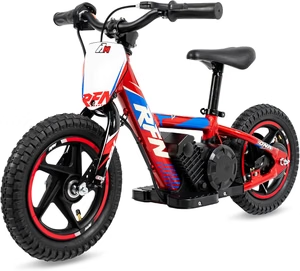
10. Best Electric Bike for Toddlers: RFN 12 Basic
Key Specifications:
- Motor: 170W peak brushed motor
- Battery: 24V 2.6Ah
- Seat height: 15–16.1 inches
- Recommended rider height: 90–110 cm
- Bike weight: Approximately 22 lbs
Finding the best toddler electric bike can be tricky, especially when it comes to seat height and speed control. The RFN 12 Basic stands out with its low adjustable seat, measuring approximately 15–16.1 inches from the ground. We’d only consider powered use for children aged three and older who meet the confirmed manufacturer requirements and have developed basic riding skills.
Compared with the Hiboy BK1, which starts at a seat height of 17.2 inches, the RFN provides extra flexibility for smaller riders. We also like its wide 2.4-inch off-road tires and relatively modest motor output. Its detailed specifications list speed settings of approximately 3.7 and 8.1 mph, although these figures conflict with the main product listing.
The 62.4Wh battery features protection against overcharging, over-discharging, and short circuits. An LED handlebar display and rear drum brake complete the setup. If you’re looking for a compact children’s electric balance bike with a low seat, the RFN is worth investigating, but confirm the exact model specifications before ordering.
Pros:
- Low, adjustable seat height for shorter riders.
- Relatively lightweight construction.
- Wide 2.4-inch pneumatic tires.
- Modest motor output compared with dirt bike alternatives.
Cons:
- Only two selectable speed settings.
- Conflicting age, speed, and range specifications.
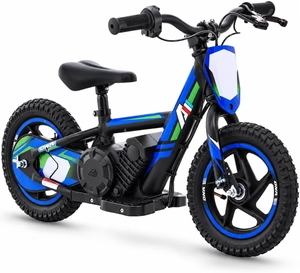
11. Best Affordable Quick-Charging Electric Balance Bike: AIII
Key Specifications:
- Motor: 150W brushless (listed for the 12-inch version)
- Speed modes: 5 and 10 mph
- Battery: Removable 24V 2.6Ah lithium-ion
- Riding time: 40–60 minutes
- Charging time: 1.5–2 hours
The AIII is a lightweight electric bike for kids that stands out for its charging convenience. While several affordable electric balance bikes take three to six hours to recharge, the AIII requires just 1.5–2 hours.
Our favorite feature is the removable battery system. Parents can charge the battery separately without moving the entire bike indoors. The protective battery enclosure is another thoughtful detail, while the aluminum alloy frame keeps the total bike weight to approximately 23.2 lbs.
The variable-speed twist throttle, adjustable seat, and 12-inch inflatable tires make up a relatively straightforward riding platform. However, the chain-driven motor requires more maintenance than a direct hub motor. The product listing also mixes specifications from different versions, so parents should confirm the motor power, age range, and braking system for their selected model.
Pros:
- Short charging time of 1.5–2 hours.
- Removable lithium-ion battery.
- Aluminum alloy frame.
- Adjustable seat for different rider heights.
Cons:
- Limited riding time of 40–60 minutes.
- Chain-driven motor requires routine maintenance.
12. Best Electric Bike for Kids With Training Wheels: ANPABO BMW R18
Key Specifications:
- Listed age: 6–12 years
- Motor: 300W peak brushless
- Speed modes: 3.1, 10, and 13 mph
- Battery: 24V 7Ah
- Weight capacity: 143 lbs
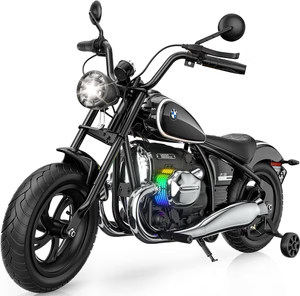
The ANPABO BMW R18 is a licensed miniature cruiser designed for children who love motorcycles. What separates it from other electric bikes for kids with training wheels is its combination of removable stabilizers, a low-speed setting, and parent-controlled access to maximum speed.
The 3.1 mph training mode is the feature we appreciate most. It’s considerably slower than the minimum powered speed of most bikes on our list. The parent-enabled 13 mph setting also provides some control over access to higher speeds. However, the training wheels are only intended for use below 3.1 mph.
The 168Wh battery provides between 60 and 120 minutes of rated riding time. Children also get Bluetooth music, simulated engine sounds, RGB lighting, and realistic BMW styling. The main inconvenience for parents is the eight to twelve hours required to recharge the battery fully.
Pros:
- Removable training wheels for low-speed use.
- Dedicated 3.1 mph training mode.
- Parent-enabled maximum speed setting.
- Realistic licensed BMW cruiser design.
Cons:
- Long charging time of eight to twelve hours.
- Large speed difference between low and medium modes.
13. Best Electric Bike for Teenagers: AVDLBIKE A13
Key Specifications:
- Motor: 500W brushless rear hub motor
- Maximum speed: 20 mph
- Battery: Removable 36V 12.8Ah lithium-ion
- Maximum range: 45 miles with pedal assistance
- Tires: 16 × 3-inch fat tires
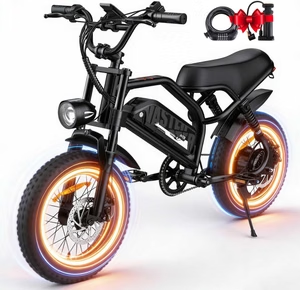
For parents looking for an electric bike for older teenagers rather than a children’s dirt bike, the AVDLBIKE A13 offers a more conventional cycling experience. It includes functional pedals, a 500W rear hub motor, and multiple riding modes, including pedal-only and pedal-assist operation.
What we like about the A13 is its combination of dual disc brakes, three-inch-wide tires, and front and rear suspension. These components help address some of the handling and comfort demands of a heavier electric bicycle. The trade-off is that wide tires and a carbon steel frame can make the bike harder to maneuver than a lightweight commuter model.
The removable 460.8Wh battery has the largest capacity among the bikes with confirmed battery specifications in our selection. Its advertised 45-mile range requires pedal assistance, so throttle-only riding will deliver less. Given its motor power and speed, we’d only consider this e-bike for experienced older teenagers who meet local riding and minimum age requirements.
Pros:
- Large 460.8Wh removable battery.
- Pedal-only, pedal-assist, and throttle riding modes.
- Front and rear suspension.
- Dual disc brakes and wide pneumatic tires.
Cons:
- Unsuitable for younger children due to power and size.
- Maximum advertised range requires pedal assistance.
14. Best Cruiser-Style Electric Bike for Kids: HYPER GOGO
Key Specifications:
- Speed modes: 5, 7, and 10 mph
- Riding time: Up to 60 minutes
- Tires: 12-inch solid tires
- Recommended rider height: 3’11″–4’9″
- Weight capacity: 143 lbs
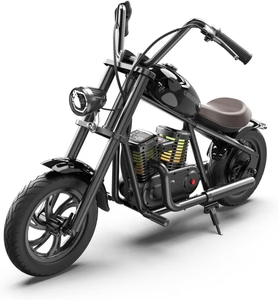
The HYPER GOGO is an electric motorcycle for kids who prefer classic cruiser styling over the aggressive appearance of a dirt bike. Its raised handlebars, low seat, simulated exhaust pipes, and decorative engine components give it a distinctive retro appearance.
We like that its three speed settings are more evenly spaced than those of many competing kids’ electric motorcycles. The adjustable handlebars also offer some flexibility when fitting the bike to the rider. Its solid 12-inch tires remove the inconvenience of repairing punctures, although they sacrifice some cushioning on rough surfaces.
This battery-powered bike for kids places considerable emphasis on entertainment. It features a Bluetooth speaker, simulated engine sounds, ambient lighting, and even a simulated exhaust fog effect. We’d consider it primarily for recreational riding on smooth, permitted surfaces rather than challenging off-road terrain.
Pros:
- Distinctive retro cruiser styling.
- Three progressively spaced speed modes.
- Puncture-free solid tires.
- Adjustable handlebars and multiple entertainment features.
Cons:
- Solid tires provide less cushioning on uneven surfaces.
- Motor wattage and battery capacity are unclear.
How We Tested and Selected the Best Electric Bikes for Kids
Our selection process focused on more than speed and motor power. We prioritized features that make a meaningful difference to young riders and their parents.
- Motor performance: Power delivery, throttle response, and suitability for different riding abilities.
- Speed control: Available speed modes, minimum powered speed, and parental control options.
- Battery performance: Battery capacity, rated riding time, charging speed, and charging convenience.
- Braking system: Brake type, accessibility, and ease of operation for smaller hands.
- Comfort and handling: Seat height, riding position, bike weight, tires, and suspension.
- Build quality: Frame construction, component quality, and maintenance requirements.
- Value for money: Features, performance, and practicality relative to the purchase price.
Is It Legal for Kids to Ride an Ebike on Public Roads?
Children can legally ride electric bikes on public roads in many US states. However, minimum age requirements vary by state, e-bike classification, and local traffic laws. Many states have no statewide minimum age for Class 1 and Class 2 e-bikes but require riders to be at least 16 to operate a Class 3 e-bike.
Here are a few examples of state-specific age restrictions:
- Minnesota: Riders must be at least 15 to operate an electric bicycle.
- Pennsylvania: Riders must be at least 16 to operate an electric bicycle.
- New York: The minimum riding age is 16.
- California: Riders must be at least 16 to operate a Class 3 e-bike.
- Maine: Riders must be at least 16 to operate Class 2 and Class 3 e-bikes.
Keep in mind that most electric balance bikes, kids’ electric dirt bikes, and pedal-free electric motorcycles do not qualify as conventional electric bicycles. These bikes should only be used in permitted riding areas or on private property unless they meet applicable road-use requirements.
What Type of Electric Bike Is Best for Your Child?
The right type of electric bike depends on your child’s age, size, riding skills, and intended use. Electric balance bikes focus on developing coordination, dirt bikes are designed for off-road riding, and pedal-assist e-bikes are better suited to eligible, experienced teenagers.
Electric Balance Bikes
Electric balance bikes have no pedals and feature low seats, compact frames, and relatively small motors. Some allow children to practice balancing and coasting without motor assistance.
The STACYC 12eDRIVE and Hiboy BK1 are good examples of this design. For children who have yet to master basic balance and steering, I would start with a regular, non-powered balance bike.
Electric Dirt Bikes
Electric dirt bikes feature motorcycle-style frames, knobby tires, throttle controls, and, in many cases, front and rear suspension.
Motor output among our selected dirt bikes reaches up to 750W peak. These bikes require greater coordination, braking skills, and physical strength. They are intended for age-appropriate, supervised off-road riding rather than public roads.
Electric Ride-On Motorcycles
Electric ride-on motorcycles focus more on recreational riding and motorcycle-inspired styling. Some come with removable training wheels, simulated engine sounds, Bluetooth speakers, and decorative lighting.
Models like the ANPABO BMW R18 offer a low-speed training mode, while the HYPER GOGO features a traditional cruiser design.
Pedal-Assist Electric Bikes
Pedal-assist electric bikes work much like regular bicycles but use a motor to reduce pedaling effort. Some also include a throttle for riding without pedaling.
These bikes are better suited to older teenagers who have developed strong cycling skills and meet local minimum age requirements. For riders aged 12–15, the American Academy of Pediatrics recommends only Class 1 e-bikes if they are ready to ride.
What Size Electric Bike Does Your Child Need?
The right electric bike size depends on your child’s height, inseam, seat height, and ability to handle the bike’s weight. Your child should be able to reach the handlebars and brake levers comfortably and place their feet on the ground when stopping.
Use the sizing chart below as a starting point to determine which wheel size may suit your child based on their age, height, and inseam.
| Age | Rider Height | Inseam | Wheel Size |
|---|---|---|---|
| 2–3 years | 2’10″–3’4″ | 14–17 inches | 12 inches |
| 3–4 years | 3’1″–3’7″ | 16–20 inches | 14 inches |
| 4–6 years | 3’7″–4’0″ | 18–22 inches | 16 inches |
| 5–8 years | 4’0″–4’5″ | 22–25 inches | 20 inches |
| 7–11 years | 4’5″–4’9″ | 24–28 inches | 24 inches |
| 10+ years | 4’9″ and above | 28+ inches | 26 inches |
Keep in mind that these measurements are based on conventional children’s bicycles, not motorized riding recommendations. Electric dirt bikes and motorcycle-style bikes have different frame proportions.
For example, the Hiboy DM14 has 18-inch wheels but is designed for riders between 4’5″ and 5’5″. Always check the individual manufacturer’s sizing chart before buying.
How to Choose the Best Electric Bike for Your Child
Choosing the best ebike for kids involves more than comparing prices and motor specifications. Here are the factors we recommend paying close attention to before making a purchase.
Recommended Age, Height, and Weight Capacity
Start with the manufacturer’s minimum age, height requirements, and weight limit. However, meeting these requirements doesn’t automatically mean your child is ready for powered riding.
Check the seat height, handlebar reach, and brake lever accessibility. Avoid buying an oversized bike simply because your child will grow into it.
Motor Power and Maximum Speed
The bikes on our list range from 100W balance bike motors to electric dirt bikes with 750W peak output. More power can improve climbing performance, but it can also make acceleration harder to manage.
I would prioritize predictable throttle response and manageable speed over higher wattage. Also, pay attention to continuous motor power rather than comparing peak wattage alone.
Adjustable Speed Modes and Parental Controls
Multiple speed settings allow eligible riders to practice at lower speeds before progressing. However, the lowest available speed deserves just as much attention as the maximum speed.
For example, the STACYC 12eDRIVE starts at 5 mph, while the ECOLEAP K2 starts at 10 mph. That’s a considerable difference.
Look for parent-lockable speed settings, key-start systems, or other controls that prevent children from accessing higher speeds without permission.
Braking System and Safety Features
Kids’ electric bikes come with various braking systems, including V-brakes, drum brakes, and mechanical disc brakes. More powerful bikes benefit from effective front and rear braking systems.
The brake levers should also be easy to reach and operate with smaller hands. Motor cutoff sensors, enclosed drivetrains, and controlled throttle response are additional features worth considering.
Battery Capacity, Range, and Charging Time
Battery capacity is best compared in watt-hours (Wh), which you can calculate by multiplying voltage by amp-hours.
For example, the Hiboy BK1 has a 56.16Wh battery, while the Hiboy DM14 packs a much larger 432Wh battery.
However, riding speed, motor power, rider weight, and terrain all affect how long an e-bike battery lasts. Removable batteries and shorter charging times can also make regular use more convenient.
Bike Weight and Frame Design
A lighter bike is easier for children to steer, reposition, and balance. Aluminum frames can help reduce weight, while steel frames may add weight but offer sturdy construction.
The STACYC 12eDRIVE weighs just 17 lbs with its battery, compared with nearly 42 lbs for the ECOLEAP K2.
Remember that maximum rider weight and bike weight are different measurements. A high load capacity doesn’t make a heavy bike easier for a small child to control.
Tires and Suspension
Pneumatic tires provide natural cushioning and can improve comfort on uneven surfaces. Solid tires eliminate punctures but offer less shock absorption.
For off-road riding, knobby tires and front or dual suspension help manage bumps and uneven terrain. Suspension is less important on balance bikes intended for smooth, flat surfaces.
Electrical Safety Certifications
Look for independently verified electrical safety certifications appropriate to the type of electric bike you’re buying.
- UL 2272: Covers electrical systems in personal electric mobility devices.
- UL 2849: Covers electrical systems in electric bicycles, including the battery, charging system, and electric drivetrain.
- UL 2271: Covers batteries designed for light electric vehicles.
The Consumer Product Safety Commission (CPSC) emphasizes compliance with applicable electrical safety standards to reduce the risk of fires and serious injuries.
These certifications address electrical hazards, not the child’s riding ability or the bike’s suitability for a particular age.
Are Electric Bikes Safe for Kids?
Electric bikes carry safety risks for children, including falls, collisions, loss of control, and battery-related fires. An appropriate bike size, controlled speed, protective equipment, riding skills, and adult supervision can reduce some of these risks, but cannot eliminate them.
The American Academy of Pediatrics advises against conventional e-bike use for children under 12 and recommends only Class 1 e-bikes for riders aged 12–15 who are ready.
Electric balance bikes and off-road motorcycles are different product categories with their own risks. Parents should follow product-specific restrictions and avoid relying solely on advertised age ranges.
Electric Bike Safety Tips for Parents
Even a well-built electric bike requires responsible use. Parents can help reduce riding and charging risks by following these precautions:
- Use appropriate protective gear: Choose a properly fitted, certified helmet suited to the riding activity. Add gloves, knee pads, elbow pads, and protective footwear for off-road riding.
- Master basic cycling skills first: Children should learn balancing, steering, and braking without motor assistance.
- Start at the lowest speed setting: If your child is eligible and ready to ride, allow them to become comfortable with the controls before considering higher speeds.
- Supervise young riders: Keep children within sight and away from traffic, steep slopes, and other hazards.
- Check the bike before every ride: Inspect the brakes, tire pressure, throttle, handlebars, and loose components.
- Never bypass speed limiters: Avoid motor, controller, or battery modifications that increase performance beyond factory settings.
- Avoid riding in heavy rain: Water resistance does not mean the electrical components are waterproof.
- Follow local riding laws: Check minimum age requirements, helmet laws, and restrictions on motorized bikes in public spaces.
Final Words
The best electric bike for kids isn’t necessarily the fastest or the one with the biggest motor. Physical fit, manageable acceleration, braking, and riding experience matter much more.
The STACYC 12eDRIVE remains our top pick for its lightweight construction and progressive learning modes, while the Hiboy BK1 offers excellent value for budget-conscious parents.
For older, experienced young riders looking for a more capable off-road machine, the Hiboy DM14 stands out with its dual braking system, suspension, and large battery.
Whatever you choose, match the bike to your child’s current abilities rather than buying more power for them to grow into.
FAQs
What is the best electric bike for kids?
The STACYC 12eDRIVE is our best electric bike for kids because of its 17-lb aluminum frame, non-powered learning mode, three speed settings, and quick-charging removable battery. The Hiboy BK1 is a more affordable alternative for appropriately sized children.
What is the best electric bike for a 5-year-old?
The STACYC 12eDRIVE and Hiboy BK1 are designed for children aged 3–5 and feature compact frames and selectable speed modes. For a five-year-old who hasn’t mastered balancing, steering, and braking, a non-powered balance bike or regular bicycle is a better starting point.
What is the best electric bike for an 8-year-old?
A regular, non-powered bicycle is the more conservative choice for an eight-year-old. While models such as the Razor MX350 and Hiboy DM14 list this age within their intended rider groups, their maximum speeds of 14 and 20 mph make them unsuitable as blanket recommendations for all eight-year-olds.
What is a safe electric bike speed for kids?
There is no universally safe electric bike speed for children. Riding experience, terrain, bike weight, braking ability, and age all affect risk. Even at 5 mph, a child can lose control or sustain an injury.
Is a 250W electric bike too powerful for a child?
A 250W motor may be too powerful for a small or inexperienced child, particularly when paired with an aggressive throttle and high maximum speed. Motor wattage alone does not determine suitability, so parents should also consider acceleration, speed restrictions, bike weight, and rider readiness.
Can kids ride electric bikes without pedaling?
Yes, electric balance bikes, electric dirt bikes, and electric motorcycles use throttle controls and do not require pedaling. However, conventional Class 1 electric bicycles require the rider to pedal before the motor provides assistance.
Can kids ride electric bikes on public roads?
Children may ride legally classified electric bicycles on certain public roads if they meet applicable local age, helmet, and vehicle requirements. Most pedal-free electric dirt bikes and ride-on motorcycles are not classified as conventional e-bikes and may be restricted to permitted off-road areas or private property.
How long do kids’ electric bike batteries last?
Many kids’ electric bikes offer around 40–120 minutes of riding time per charge, although larger models may run longer under favorable conditions. Actual battery runtime depends on battery capacity, riding speed, motor power, rider weight, terrain, and temperature.

Michael Josh is a hands-on e-bike tester and reviewer at BoltBikers, known for putting every model through real-world rides before sharing his thoughts. With a sharp eye for performance, comfort, and build quality, he helps the team choose which bikes are worth featuring. Backed by years of experience in tech and gear reviews, Michael brings trusted, honest insights to help readers find the right e-bike for their needs.