A fully charged e-bike battery that will not power the bike usually comes down to a loose connection, a locked battery management system, a blown fuse, or a voltage drop under load.
In many real troubleshooting cases, the battery itself is not actually dead, even though the bike will not turn on.
This confuses riders because the display only shows charge level, not how much usable power the battery can deliver. A battery can read full and still fail the moment the motor asks for energy.
Why Your E-Bike Battery Is Fully Charged but Not Working
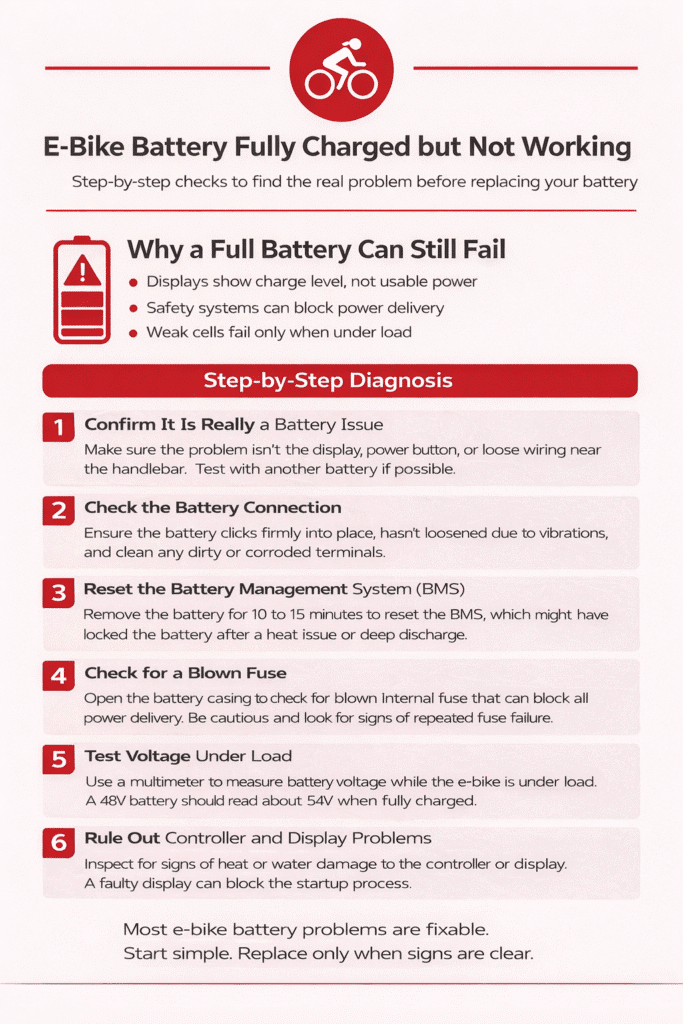
If your e-bike battery shows a full charge but the bike will not turn on, the issue is often not the battery itself. In many cases, the problem comes from connections, safety cutoffs, or voltage delivery issues that the display does not show.
This situation confuses riders because battery indicators only show charge level, not whether the battery can actually deliver power under load.
Step 1: Confirm It Is Really a Battery Issue
Before assuming the battery has failed, it is important to rule out simple issues that can stop the bike from powering on.
E-bike displays can fail, freeze, or stay dark even when power is present. A faulty power button, loose wiring near the display, or a damaged connector can interrupt the startup signal.
I have seen bikes look completely dead when the real issue was a loose display cable near the handlebar.
If possible, testing with another known working battery saves time. If the bike powers on instantly, the issue is isolated to the original battery.
Step 2: Check the Battery Connection the Right Way
Loose battery seating is one of the most common causes of a no-start issue.
A properly seated battery usually makes a firm click and does not move when pushed. Over time, vibration from riding can cause slight shifts that break electrical contact, even though the battery still looks locked in place.
Dirt or corrosion on the terminals can also block current flow. Even a thin layer can prevent the battery from delivering power while still showing full charge. I have had a battery look perfect until I removed it and cleaned the contacts, after which the bike powered on immediately.
Step 3: Reset a Locked Battery Management System (BMS)
The battery management system protects the battery from unsafe conditions, but it can also shut the battery down completely.
A BMS can lock after deep discharge, overheating, or sudden voltage drops. When this happens, the battery may still show a full charge but refuse to send power to the bike.
In real use, a proper reset often takes longer than people expect. Disconnecting the battery and leaving it off the bike for ten to fifteen minutes works more reliably than quick resets. If resets fail repeatedly, it usually signals internal battery or cell imbalance issues.
Step 4: Check for a Blown Fuse or Internal Cutoff
Many e-bike batteries include internal fuses or circuit breakers that cut power during electrical surges.
These fuses can blow after drops, wiring faults, or sudden load spikes. Because they sit inside the battery or controller housing, riders often miss them.
If a replacement fuse blows again quickly, it usually points to a wiring short or controller problem rather than the battery itself.
Step 5: Test Battery Voltage Under Load
This is where many fully charged batteries fail in real life.
Battery displays show charge percentage, not true voltage output. A battery can read full but drop voltage sharply once the motor demands power.
For example, a healthy 48V battery should read around 54V when fully charged. If it drops well below that under load, weak cells inside the battery are likely collapsing. This is one of the clearest signs that a battery is near the end of its usable life.
Step 6: Rule Out Controller and Display Problems
Sometimes the battery is working fine, but power never reaches the motor.
Controllers can fail due to heat buildup or water exposure. Displays can also block startup if they are damaged or not communicating properly with the controller.
Intermittent cutouts while riding matter. If the bike shuts off under load and comes back after cooling down, the controller may be overheating rather than the battery failing.
Step 7: Motor or Throttle-Related No-Start Issues
Motor or throttle issues are less common, but they still happen.
A stuck throttle can prevent the system from engaging as a safety measure. Testing pedal assist helps isolate whether the issue is throttle-related. Clicking sounds or error codes often point to motor sensor or wiring problems rather than battery failure.
At this stage, the goal is not guessing, but narrowing the issue to the correct component before replacing anything.
When a Fully Charged Battery Is Actually Dying
Sometimes the battery really is at the end of its life, even if it still shows a full charge. Most e-bike batteries are designed to last about 500 to 1,000 full charge cycles, so cell wear becomes more common as the battery ages.
The key is knowing the difference between a fixable issue and a failing battery.
One clear sign is a fast voltage drop under load. The battery looks fine at rest, but the moment you start riding, power cuts out or the bike shuts off. This usually means the internal cells can no longer handle demand.
Another sign is reduced range that does not improve after resets. If your rides keep getting shorter even after resetting the BMS and checking connections, the battery is likely worn out.
A simple confirmation is testing with another battery. If the bike runs perfectly with a different battery, the original one is the problem. At that point, replacement is often the safest option. Failing cells can behave unpredictably, and continuing to ride can damage other components.
How to Prevent This Problem in the Future
Good habits go a long way in avoiding battery issues. A few simple changes can make a real difference over time.
- Store the battery partially charged during long breaks: If you are not riding for a few weeks, avoid leaving the battery completely full or fully empty. Both extremes put stress on the cells and can trigger BMS lockouts. I usually aim for a middle range, which keeps the battery more stable during storage.
- Avoid running the battery down to zero often: Frequent full discharges wear lithium cells faster. Shallow charging cycles are easier on the battery and help it maintain steady voltage when you ride. Topping up before it gets very low is better than draining it every time.
- Keep the battery away from heat: Heat speeds up battery aging more than most riders realize. Storing the battery in hot garages, sheds, or cars during idle periods can quietly shorten its lifespan. A cool, dry indoor spot works best.
- Check and clean the terminals occasionally: Dust and moisture build up over time and can interfere with power delivery. A quick inspection and light cleaning every few months helps prevent connection problems that look like battery failure.
Final Words
A fully charged e-bike battery that will not work is frustrating, but most cases are fixable. Loose connections, safety cutoffs, and misleading displays cause far more issues than total battery failure.
Displays lie more often than batteries fail. A systematic check saves money, time, and guesswork. Start simple, rule out the easy problems, and only replace the battery when the signs are clear.
That approach keeps you riding and avoids unnecessary replacements.
FAQs
Why does my battery say full but shut off?
Because the display shows charge level, not usable power. Weak cells or safety cutoffs can stop power delivery even when the battery appears full.
Can a charger cause this issue?
Yes. A faulty charger can show a full charge without actually bringing the battery to proper voltage. This can lead to early cutouts.
Is riding with a weak battery dangerous?
It can be. Sudden power loss under load can affect balance and may stress the controller or motor. Replacing a failing battery is safer.
Can a BMS permanently lock a battery?
In rare cases, yes. Severe cell imbalance or internal damage can trigger a lock that resets will not fix, which usually means replacement.

Al Amin Morshed is the founder of BoltBikers and a seasoned e-bike reviewer with years of hands-on experience testing electric bikes. As a long-time e-bike enthusiast, he combines real-world riding insights with in-depth research to create honest, helpful content for riders of all levels. Through BoltBikers, Morshed aims to make e-biking more accessible, practical, and enjoyable – whether you’re a new rider or a daily commuter looking for the best gear.