Finding the best e-bike for wheelies comes down to motor torque, balance, throttle response, and braking control.
Some bikes deliver serious power for experienced riders, while others offer a more manageable setup for beginners.
We tested 13 electric bikes and reviewed the top 7 best e-bikes for wheelies to help you find the right option for your skill level and budget.
Some of the links on this site are affiliate links. This means we may earn a commission if you make a purchase through them, at no extra cost to you.
Top Electric Bikes for Wheelies At a Glance
Here’s a quick side-by-side look at the best e-bikes for wheelies in 2026, from high-torque beasts to beginner-friendly picks.
| Bike Model | Motor Power | Battery & Range | Top Speed | Suspension | Brakes | Best for |
|---|---|---|---|---|---|---|
| Anyland Rev Pro 3000W | 3000W, 160 Nm peak torque | 48V 22.5Ah (1080Wh), up to 48 miles | 34 MPH | Front and rear | Hydraulic disc brakes | Best overall |
| FLWVIN 2000W Peak | 2000W peak | 48V 20Ah (960Wh), up to 80 miles | 34 MPH | Front and rear | Mechanical disc brakes | Best budget option |
| vefreedom 1500W Folding | 750W rated (1500W peak), 65 Nm | 52V 20Ah (1040Wh), up to 70 miles (PAS) | 30 MPH | Full suspension | Mechanical disc brakes | Best folding e-bike for wheelies |
| OUXI V8 | 1500W peak | 48V 15Ah (720Wh), up to 60 miles (PAS) | Not confirmed | Not confirmed | Type not confirmed | Best retro-styled e-bike |
| TST 1500W Fat Tire | 750W rated (1500W peak) | 48V 15Ah (720Wh), up to 60 miles (PAS) | Not confirmed | Front and rear | Mechanical disc brakes | Best for comfort |
| ESKUTE V100 | 1500W peak | 48V 13Ah (624Wh), up to 60 miles (PAS) | 20+ MPH | Front and rear | Type not confirmed | Best compact option for beginners |
| Jasion Thunder 1800W | 1800W peak, 85 Nm torque | 48V 18Ah (864Wh), up to 80 miles | 30 MPH | Front (selected variant) | Type not confirmed | Best for braking and control |
Best E-Bike for Wheelies in 2026: Our Top Picks
- Best Overall: Anyland Rev Pro 3000W
- Best Budget: FLWVIN 2000W Peak
- Best Folding E-Bike for Wheelies: vefreedom 1500W Folding E-Bike
- Best Retro-Styled Wheelie E-Bike: OUXI V8
- Best for Comfort: TST 1500W Fat Tire E-Bike
- Best for Beginners: ESKUTE V100
- Best for Braking and Control: Jasion Thunder 1800W
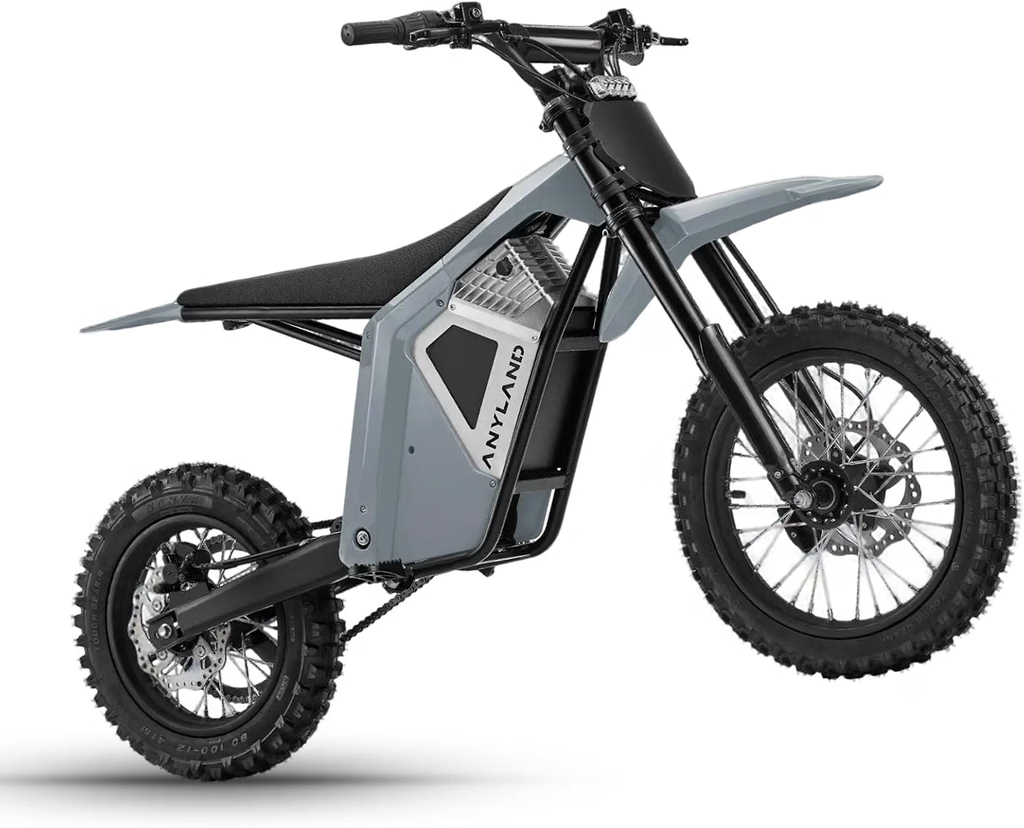
1. Best Overall E-Bike for Wheelies: Anyland Rev Pro 3000W
Key Specifications:
- Motor: 3000W mid-drive motor (160 Nm peak torque)
- Battery: 48V 22.5Ah (1080Wh)
- Top Speed: Up to 34 MPH
- Range: Up to 48 miles
- Suspension: Front hydraulic fork and rear suspension
- Brakes: Front and rear hydraulic disc brakes
The Anyland Rev Pro stands out as our best overall electric bike for wheelies because it has something most electric dirt bikes don’t: a dedicated auto-wheelie controller. Combined with its 3000W motor and claimed 160 Nm of torque, it’s built specifically for riders interested in front-wheel lift and balance control.
During our review, the Moxin Smart Wheelie Controller was the feature that caught our attention. According to Anyland, the system offers three preset wheelie angles of 25°, 35°, and 45°. Instead of depending entirely on throttle input and body position, riders can use electronic assistance to help manage the front wheel’s angle. That doesn’t make wheelies risk-free, but it gives this bike a clear advantage in its intended purpose.
We also liked the combination of a mid-drive motor and hydraulic disc brakes. The motor’s high torque rating suggests strong acceleration potential, while the braking system provides the type of control we’d want on a powerful electric dirt bike. The front hydraulic fork and rear suspension are useful additions for riding over uneven dirt surfaces.
The 1080Wh battery is another highlight, with a claimed range of up to 48 miles. However, aggressive acceleration and repeated wheelie attempts can drain the battery much faster than ordinary riding.
At nearly $1,300, the Rev Pro is also the most expensive bike on our updated list. Still, for riders specifically looking for a purpose-built electric wheelie bike, its dedicated controller makes it our top choice.
Pros:
- Dedicated Moxin auto-wheelie controller
- Three selectable wheelie-angle settings
- Powerful 3000W motor with 160 Nm peak torque
- Hydraulic disc brakes for controlled stopping
- Full suspension and large 1080Wh battery
Cons:
- Expensive compared with standard fat-tire e-bikes
- High power demands experience and careful handling
- Electric dirt bike without conventional bicycle pedals
2. Best Budget E-Bike for Wheelies: FLWVIN 2000W Peak
Key Specifications:
- Motor: 2000W advertised peak power
- Battery: 48V 20Ah (960Wh)
- Top Speed: Up to 34 MPH
- Range: Up to 80 miles (claimed)
- Suspension: Front and rear suspension
- Brakes: Mechanical disc brakes
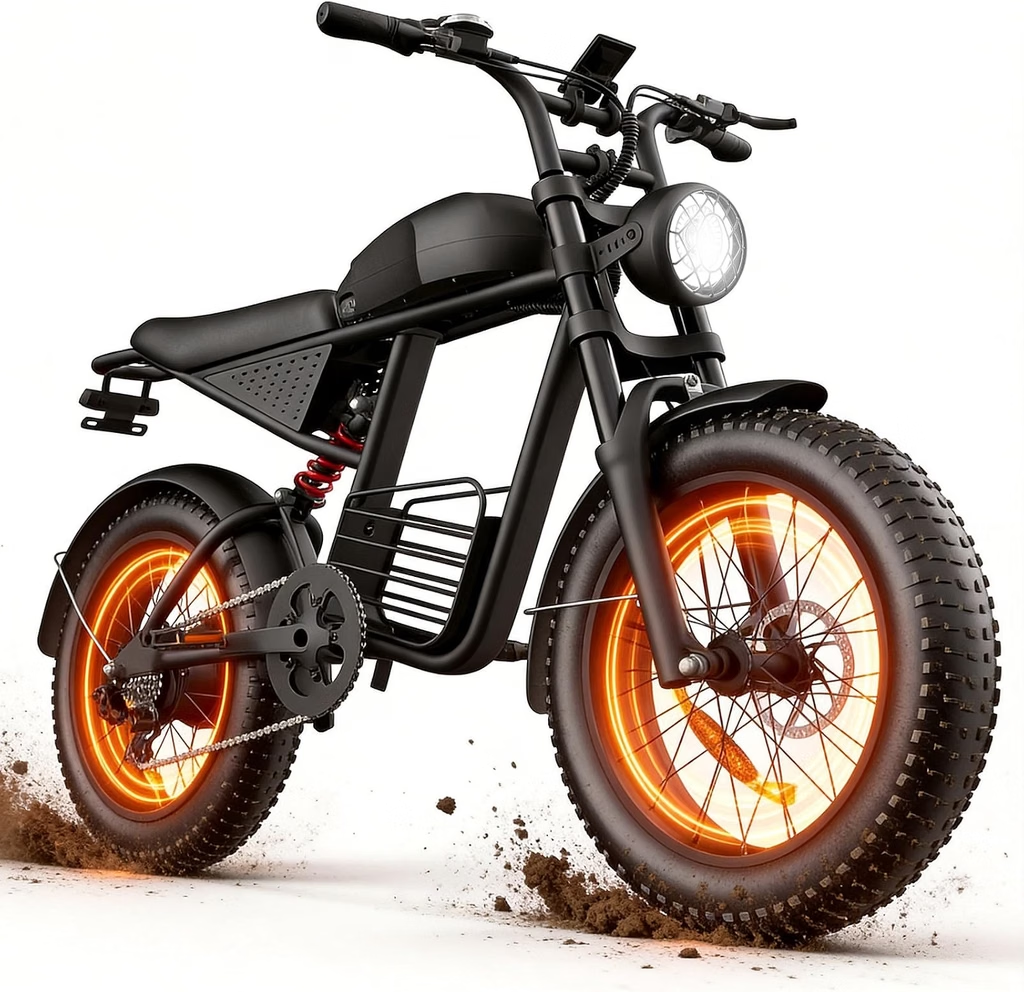
The FLWVIN 2000W is an interesting choice for riders who want a powerful, motorcycle-style electric bike without spending over $1,000. With its advertised 2000W peak motor, compact 20-inch fat tires, and full suspension, it has several features worth considering for recreational wheelie riding.
When we assessed this bike’s wheelie potential, the combination of motor power and frame geometry stood out. Its 20 × 4-inch tires and relatively compact design make it different from traditional 26-inch commuter e-bikes. The shorter-wheel format may help riders manage weight shifts, although the bike’s total weight and balance point still play a major role.
Another feature we appreciated was the 48V 20Ah removable battery. At 960Wh, it offers considerably more capacity than many budget e-bikes. That’s useful for longer riding sessions, particularly when using higher power settings that consume electricity quickly.
The front and rear suspension also help with comfort on rough pavement and dirt paths. However, the mechanical disc brakes are a compromise. For wheelie riding, rear-brake modulation is particularly important, and we’d prefer a well-adjusted hydraulic setup with a predictable lever feel.
The biggest question is how smoothly the throttle delivers power. A 2000W peak rating sounds impressive, but it doesn’t tell us how gradually the motor responds when the rider changes throttle input.
For its price, the FLWVIN offers an appealing combination of power, battery capacity, and fat-tire styling. Just don’t confuse its high motor rating with verified stunt capability.
Pros:
- Affordable for a 2000W peak-rated e-bike
- Compact 20-inch fat-tire configuration
- Large 960Wh removable battery
- Front and rear suspension for rough surfaces
- Seven-speed drivetrain for regular pedaling
Cons:
- Mechanical disc brakes require careful adjustment
- Throttle response and wheelie durability are not verified
- Heavy moped-style construction
3. Best Folding E-Bike for Wheelies: vefreedom 1500W
Key Specifications:
- Motor: 750W rated (1500W peak, 65 Nm torque)
- Battery: 52V 20Ah (1040Wh)
- Top Speed: Up to 30 MPH
- Range: Up to 70 miles (PAS)
- Suspension: Full suspension
- Brakes: Front and rear mechanical disc brakes
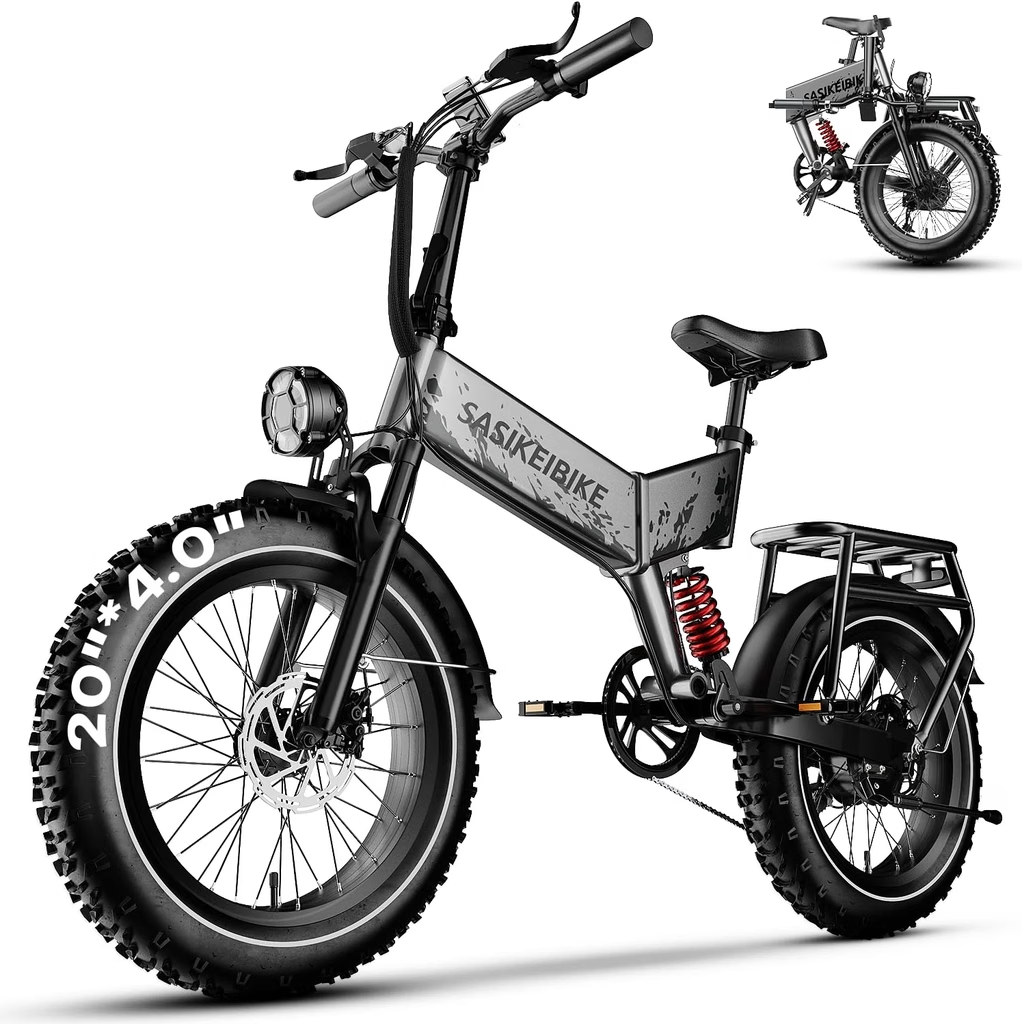
The vefreedom 1500W is our pick for riders who want a compact folding e-bike with enough motor assistance for recreational riding. It combines a 1500W peak motor, 20-inch fat tires, and a large 1040Wh battery in a frame that folds for storage.
One thing that stood out during our evaluation was the combination of 65 Nm torque and 20 × 4-inch tires. The smaller wheels may make weight shifts feel more responsive than those on a large commuter bike. However, the 65 Nm torque rating is modest compared with the more powerful models on this list, so riders shouldn’t expect the same acceleration.
We also appreciated the full-suspension setup. The front fork and rear shock help absorb bumps during normal riding, especially on gravel paths and uneven pavement. The wide tires add cushioning and traction, although they also contribute extra weight.
Battery capacity is one of this bike’s strongest selling points. Its 52V 20Ah battery provides 1040Wh of energy, which is substantial for a folding e-bike. The manufacturer advertises up to 70 miles using pedal assist, but high-power riding will reduce that figure.
There is one important drawback for wheelie enthusiasts: the folding mechanism. A folding hinge introduces an additional structural connection that needs inspection, and the listing doesn’t confirm that it’s designed for repeated wheelie landings. We’d avoid treating the folding feature as proof of stunt suitability.
For riders who mainly want a fat-tire e-bike for commuting, cruising, and occasional recreational use, the vefreedom offers good flexibility. It’s less convincing as a dedicated stunt bike.
Pros:
- Folding design for easier storage
- Large 1040Wh removable battery
- Comfortable 20 × 4-inch fat tires
- Full suspension for uneven surfaces
- Three riding modes and seven-speed gearing
Cons:
- Folding frame is not confirmed as stunt-rated
- Mechanical brakes need regular maintenance
- 65 Nm torque is lower than some competitors
4. Best Retro-Style E-Bike for Wheelies: OUXI V8
Key Specifications:
- Motor: Up to 1500W peak power
- Battery: 48V 15Ah (720Wh), selected variant
- Top Speed: Not confirmed for this variant
- Range: Up to 60 miles (PAS)
- Tires: 20-inch fat tires
- Design: Retro motorcycle-style frame
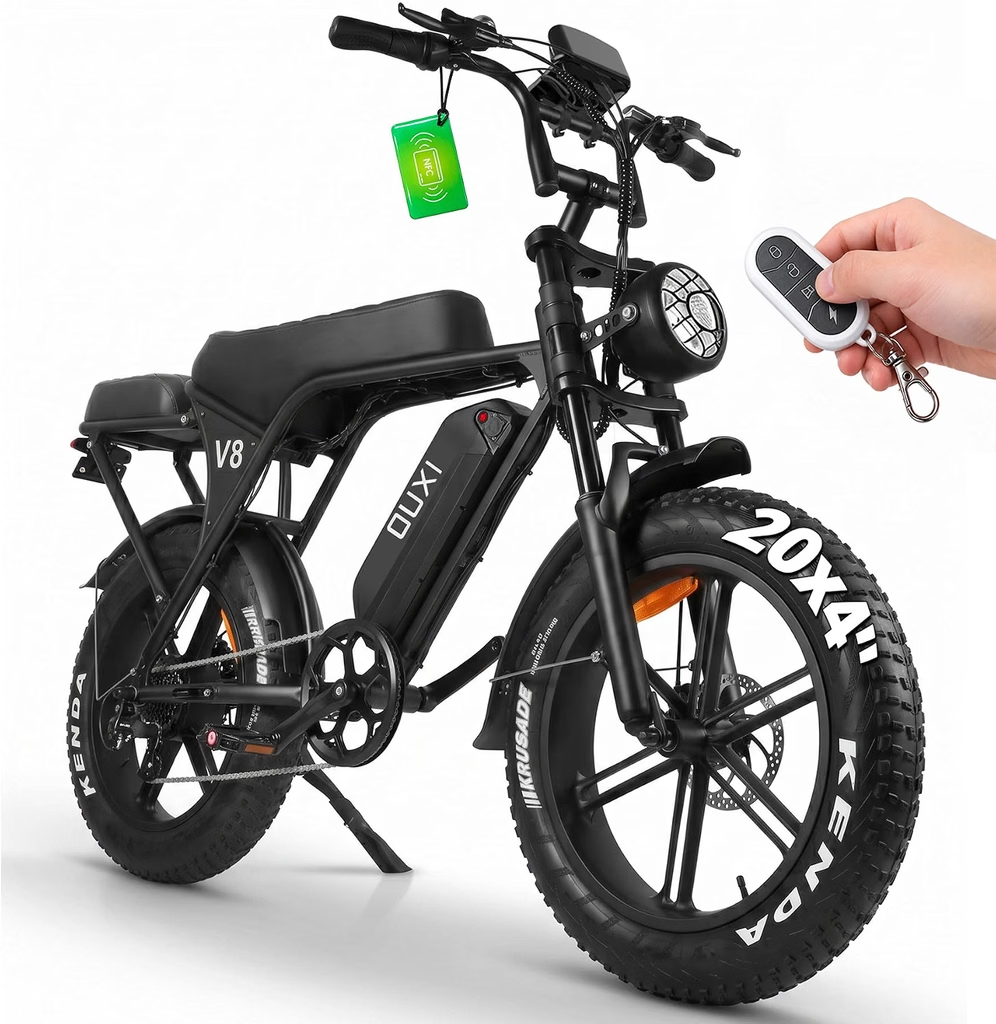
The OUXI V8 is a great-looking option for riders who prefer a classic motorcycle design over a traditional bicycle frame. With its long saddle, round headlight, 20-inch fat tires, and 1500W advertised peak motor, it brings plenty of retro character to the wheelie e-bike category.
When we examined the V8’s configuration, the frame design was one of its most interesting features. The long bench-style saddle gives riders room to adjust their seating position, while the compact wheels create a different handling setup from full-size commuter bikes.
The 1500W peak motor also offers promising acceleration potential. For riders interested in learning how power delivery affects front-wheel lift, however, smooth throttle control matters more than the headline wattage. We wouldn’t assume the V8 has predictable wheelie performance without testing that response directly.
We also liked the 48V removable battery. The selected 15Ah configuration provides 720Wh, with a claimed pedal-assist range of up to 60 miles. That’s useful for everyday cruising and recreational rides, though demanding throttle use can cut the range substantially.
Comfort is another reason to consider this model. The wide tires can help absorb smaller bumps and provide traction on loose surfaces. Still, tire pressure, surface conditions, and rider weight affect how the bike behaves.
The OUXI V8 is more of a stylish recreational e-bike than a purpose-built wheelie machine. For riders who want something that looks good, handles casual riding duties, and has enough motor power to explore its performance, it’s worth considering.
Pros:
- Attractive retro motorcycle styling
- 1500W advertised peak motor
- Comfortable long saddle
- Wide 20-inch fat tires
- Removable battery for convenient charging
Cons:
- Wheelie capability is not independently verified
- Suspension and brake specifications need confirmation
- Bench-style saddle offers limited height adjustment
5. Best Comfortable Moped-Style E-Bike: TST 1500W
Key Specifications:
- Motor: 750W rated (1500W peak)
- Battery: 48V 15Ah (720Wh)
- Top Speed: Not confirmed for selected variant
- Range: Up to 60 miles (PAS)
- Suspension: Front and rear suspension
- Brakes: Mechanical disc brakes
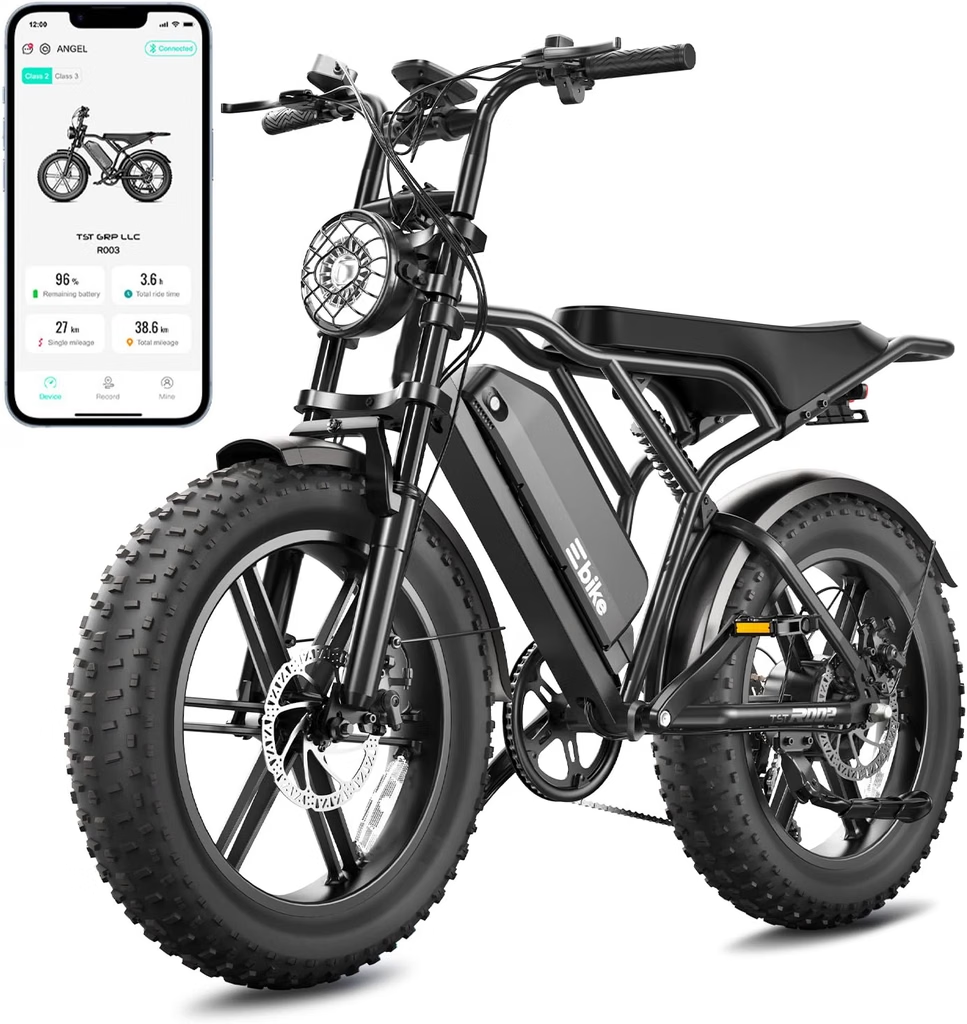
The TST 1500W is one of our favorite options for riders who want a comfortable moped-style electric bike that can handle daily riding and recreational adventures. Its full suspension, 20 × 4-inch tires, and long padded saddle give it a relaxed feel compared with more aggressive electric dirt bike designs.
During our assessment, the full-suspension setup was the first thing we liked. The combination of a front fork and rear shock is useful when riding over rough pavement or uneven trails. Wide fat tires provide another layer of cushioning and can improve traction on suitable loose surfaces.
For wheelie-focused riding, the 1500W peak motor is the main attraction. It has more advertised peak power than basic commuter e-bikes, but we wouldn’t judge front-wheel lift from that figure alone. The bike’s weight distribution and throttle response are just as important.
We also appreciated its seven-speed drivetrain and multiple riding modes. They make the TST more versatile for regular riding, rather than limiting it to throttle-powered recreational use.
The 48V 15Ah battery offers 720Wh, with the manufacturer claiming up to 60 miles on pedal assist. There’s also a larger 25Ah version available, but that specification shouldn’t be confused with the 15Ah model reviewed here.
The fixed bench saddle is the main comfort tradeoff. It’s spacious for casual cruising but doesn’t provide the same height adjustment as a conventional bicycle seat. Mechanical disc brakes are another limitation, particularly for riders who want precise rear-brake control.
Still, for someone looking for a comfortable fat-tire cruiser with strong advertised motor assistance, the TST offers an appealing combination.
Pros:
- Comfortable front and rear suspension
- 1500W peak motor for recreational riding
- Wide 20 × 4-inch fat tires
- Spacious padded saddle
- Seven-speed gearing and multiple riding modes
Cons:
- Mechanical brakes lack the hydraulic setup we’d prefer
- Fixed saddle limits adjustment for active pedaling
- Not specifically certified for stunt riding
6. Best Compact E-Bike for Beginners: ESKUTE V100
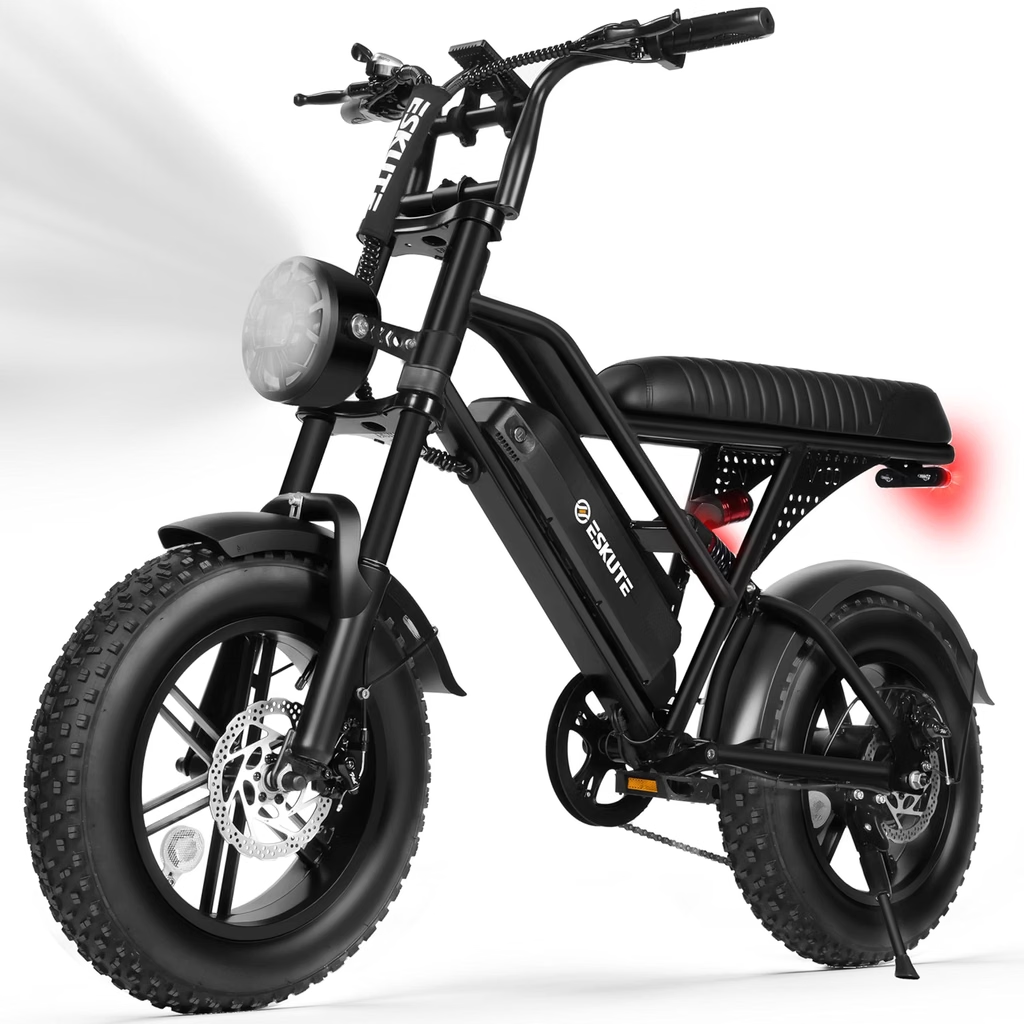
Key Specifications:
- Motor: 1500W advertised peak
- Battery: 48V 13Ah (624Wh)
- Top Speed: 20+ MPH
- Range: Up to 60 miles (PAS)
- Suspension: Front fork and rear shock
- Tires: 16 × 4-inch fat tires
The ESKUTE V100 is an affordable compact electric bike with a distinctive mini-moped design. Its 16-inch wheels, low seat, and dual suspension make it an interesting choice for riders who want a smaller electric bike while developing their basic riding and balance skills.
When we evaluated its design, the 16 × 4-inch tire setup stood out immediately. Compared with the larger 20-inch and 26-inch e-bikes in this roundup, the V100 has a more compact stance. That may make the bike easier to position and maneuver, although smaller wheels also react differently to bumps and uneven surfaces.
The 1500W advertised peak motor gives the bike considerable power on paper. We wouldn’t describe it as a gentle beginner motor, though. New riders should become comfortable with low-speed throttle response, cornering, and braking before trying any front-wheel lift.
We also liked the dual suspension. The front fork and rear shock make the V100 more suitable for rough pavement and casual off-road paths than a rigid-frame mini e-bike. Its fat tires provide extra cushioning and contact with the ground.
The battery is a 48V 13Ah unit, giving it 624Wh of energy. The manufacturer claims up to 60 miles with pedal assist, although the smaller battery means high-power riding can significantly shorten the distance between charges.
At under $400 in your Amazon screenshot, the V100 is one of the most affordable models on the list. Its compact size and low price are appealing, but beginners shouldn’t assume that makes wheelies safe or easy.
I’d recommend it to riders who want a small recreational e-bike first, with wheelie practice considered only after they have the necessary skills and a suitable, permitted practice area.
Pros:
- Affordable entry-level price
- Compact 16-inch fat-tire design
- Front and rear suspension
- Removable 624Wh battery
- Seven-speed gearing for everyday riding
Cons:
- 1500W peak output may be demanding for beginners
- Smaller wheels can react sharply to rough surfaces
- No confirmed wheelie-specific safety system
7. Best E-Bike for Braking and Control: Jasion Thunder
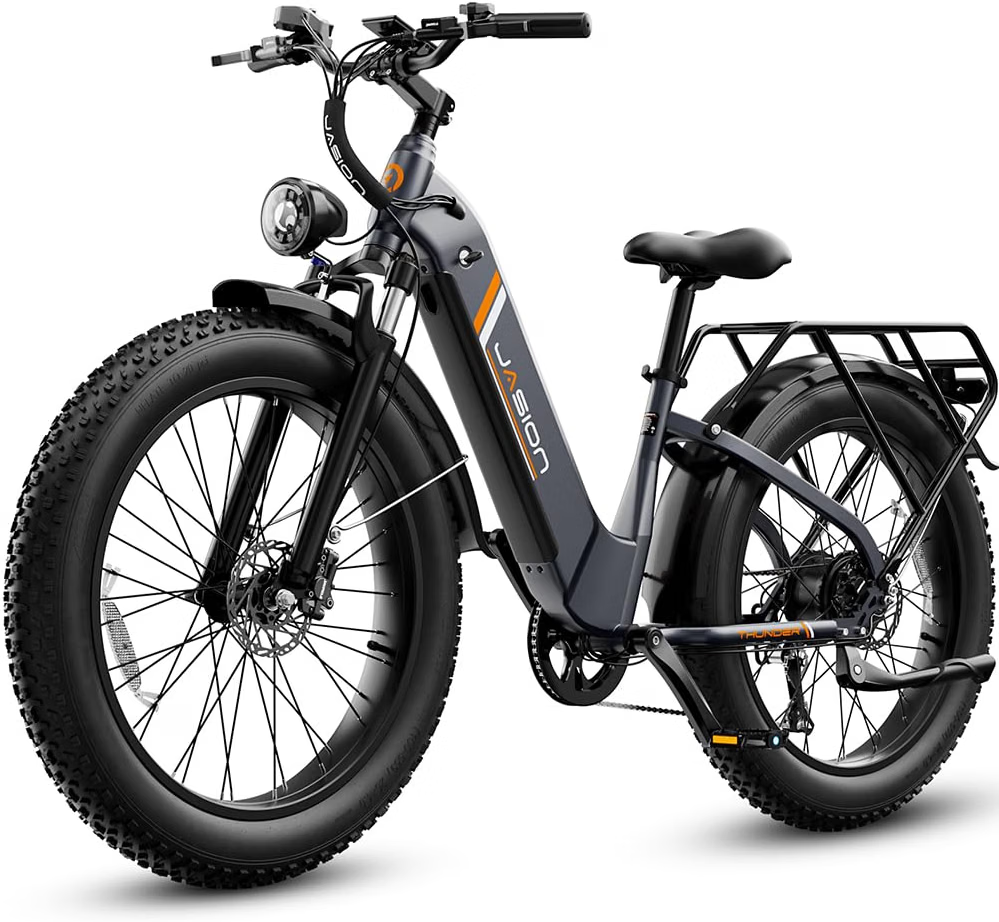
Key Specifications:
- Motor: 1800W peak (85 Nm torque)
- Battery: 48V 18Ah (864Wh)
- Top Speed: Up to 30 MPH
- Range: Up to 80 miles (claimed)
- Suspension: Front suspension on the selected listing
- Tires: 26 × 4-inch fat tires
The Jasion Thunder is a powerful fat-tire step-through e-bike that brings together an 1800W peak motor, 85 Nm of torque, and a large 864Wh battery. Unlike the smaller moped-style bikes in this roundup, it has a more traditional bicycle layout, making it a useful choice for everyday riding.
When we assessed the Thunder for wheelie-focused riding, the motor torque and braking controls were the main things we considered. The 85 Nm rating suggests useful climbing and acceleration assistance, but its larger 26-inch wheels and longer bicycle-style frame create a different balance setup from compact 16-inch or 20-inch models.
We also appreciated the wide 26 × 4-inch tires. They’re useful for maintaining traction on gravel and uneven surfaces, although the added tire weight can make the front end feel less responsive to rapid changes in direction.
The braking system deserves special attention. A reliable rear brake matters enormously when controlling front-wheel lift, and we’d want to verify the exact brake specification on the selected Thunder variant before recommending it for repeated wheelie practice. The Amazon listing emphasizes braking performance but doesn’t clearly identify hydraulic brakes for this configuration.
Battery capacity is another strength. At 864Wh, the removable battery gives riders substantial energy for commuting and recreational trips. Jasion advertises up to 80 miles, though the range will fall with higher assist levels and aggressive acceleration.
The Thunder is heavier and bulkier than a compact wheelie-focused bike. However, its conventional pedals, adjustable saddle, and commuting features make it more practical for riders who need one e-bike for different kinds of riding.
For riders who value a familiar bicycle layout, fat-tire traction, and strong motor assistance, the Jasion Thunder is a solid alternative to the moped-style models.
Pros:
- Strong 1800W peak motor and 85 Nm torque
- Large 864Wh removable battery
- Wide 26 × 4-inch fat tires
- Comfortable step-through frame
- Useful for commuting and recreational riding
Cons:
- Larger wheels and substantial weight can complicate wheelie control
- Exact brake configuration needs confirmation
- Less compact than dedicated wheelie-style bikes
Can You Do a Wheelie on an E-Bike?
Yes, you can wheelie an e-bike, especially if it has strong torque (750W+), a responsive throttle, and good weight distribution. Mid-drive motors offer controlled lift, while rear hub motors provide instant power for quick pop-ups.
Throttle-controlled e-bikes make wheelies easier since you don’t need to pedal, but pedal-assist models work too with proper timing and gearing. A shorter wheelbase and balanced frame help with stability, while keeping a finger on the rear brake prevents looping out.
Most fat-tire and mountain e-bikes handle wheelies well, but lightweight commuter models may struggle due to lower torque and longer frames. Practicing on a flat, open area with no obstacles is the best way to get comfortable.
How to Wheelie an E-Bike (Step-by-Step Guide)
Pulling a wheelie on an e-bike is all about timing, balance, and throttle control. It might look intimidating, but with the right technique, you can pop the front wheel up smoothly and stay in control. Here’s how to do it step by step.
Step 1: Pick the Right Spot
Find a flat, open area with minimal traffic. A grassy field or dirt path is ideal because it gives you a softer landing if things don’t go as planned.
Step 2: Get in Position
- Stand up slightly over the pedals, keeping your arms relaxed.
- Lower your seat slightly for better control.
- Keep one finger on the rear brake—this is your safety net if you go too far back.
Step 3: Find the Power Band
- If you’re using a throttle-only e-bike, get rolling at around 10-15 MPH before engaging the throttle.
- If you’re using pedal assist, shift to a medium gear and pedal up to speed.
Step 4: Initiate the Lift
- Lean forward slightly, then quickly lean back while pulling up on the handlebars.
- At the same time, hit the throttle or pedal hard to lift the front wheel.
- Use your arms to pull evenly—don’t jerk the bars too hard, or you’ll lose control.
Step 5: Maintain Balance
- Keep your eyes forward, not down—looking ahead helps with stability.
- Feather the rear brake if you feel like you’re tipping too far back.
- If the front wheel starts dropping, give it a bit more throttle or pedal harder.
Step 6: Land Smoothly
- Let the front wheel drop gradually, don’t slam it down.
- Shift your weight forward and absorb the impact with your arms and legs.
Practicing small, controlled wheelies first will build muscle memory and confidence. With time, you’ll get a feel for how much throttle and body movement is needed to hold it steady.
How to Choose the Best E-Bike for Wheelie
Before breaking down the key features, it’s worth explaining how we evaluated these bikes.
We focused on e-bikes we could realistically lift into a wheelie without fighting the throttle, and we paid close attention to how predictable the power delivery felt, not just how strong it was on paper.
Here’s what to look for when choosing one.
High-Torque Motor
The most important factor in an e-bike for wheelies is torque—this is what helps lift the front wheel off the ground. A mid-drive or high-output hub motor with at least 750W to 2000W will give you that quick, punchy acceleration needed to pop a wheelie with ease.
A mid-drive motor applies power directly to the drivetrain, giving better weight distribution and natural control, while a hub motor delivers instant power straight to the rear wheel for strong takeoff.
Throttle Response & Power Delivery
Throttle control can make or break a wheelie. If the power kicks in too suddenly, it can throw off your balance. Look for an e-bike with smooth, predictable throttle engagement that allows for gradual lift rather than an abrupt jolt.
Adjustable throttle sensitivity or torque-sensing pedal assist is ideal, as it lets you fine-tune how much power is delivered when you accelerate.
Weight & Frame Geometry
A lighter frame with a shorter wheelbase makes lifting the front wheel much easier. A long, heavy e-bike will require more effort to pop into a wheelie, while a compact and well-balanced frame helps keep things controlled.
Lower center of gravity also plays a role—if the weight is evenly distributed rather than rear-heavy, it’ll be easier to maintain a smooth wheelie.
Braking System
A strong and responsive rear brake is your best safety tool when learning to wheelie. If you start to tip back too far, a quick tap on the rear brake will bring the front wheel down safely.
Hydraulic disc brakes provide better stopping power and smoother control compared to mechanical brakes. Look for two-finger brake levers for quick and effortless braking when balancing a wheelie.
Suspension & Tires
- Front suspension helps with soft landings, absorbing impact when you bring the front wheel down.
- Rear suspension can make balance trickier, as it absorbs movement rather than keeping the back end stable.
- Fat tires provide better traction and cushion impacts, but a slightly narrower tire offers better responsiveness when making micro-adjustments in a wheelie.
- If you’re riding off-road, a full-suspension setup will keep things comfortable. For urban wheelies, a rigid or hardtail frame gives you more direct control.
Battery Placement & Weight Distribution
The position of the battery plays a big role in wheelie performance. Batteries mounted low and centered help keep the bike balanced when the front wheel is in the air.
If the bike is rear-heavy, it can make wheelies harder to control and recover from. A removable battery also allows you to adjust weight distribution if needed.
Related articles:
- Best eBike for food delivery
- Best electric chopper bike
- Best moped-style eBike
- Best electric dirt bike
- Best electric bike for college students
Best Upgrades & Modifications for Wheelie Performance
Even a solid e-bike can benefit from a few upgrades to make wheelies easier and more controlled. Here are some of the best modifications to improve performance.
- Higher Handlebars or Riser Bars – Raising the handlebars gives you more leverage when pulling up the front wheel, reducing strain on your arms and improving balance.
- Upgraded Brake System – A high-performance hydraulic rear brake provides better control over your balance point, making it easier to keep the front wheel up without overcorrecting.
- More Powerful Controller – A higher-output controller improves throttle response, allowing for finer control over how power is delivered when lifting the front wheel.
- Rear Brake Sensor Removal – Some e-bikes have a built-in safety feature that cuts power when you tap the brake. Removing this sensor allows for a smoother transition between braking and accelerating during a wheelie.
- Lighter Components – Swapping to a carbon fiber seat post, lightweight wheels, and a smaller battery can shave off unnecessary weight, making it easier to pop the front wheel.
- Tire Selection – Semi-slick tires roll faster and make balance adjustments easier, while fat tires provide more grip but can slow down the lift.
- Adjustable Pedal Assist Levels – If your e-bike has multiple PAS settings, fine-tuning it to a lower-speed torque setting helps control the wheelie better without sudden surges of power.
- Higher Voltage Battery – If your e-bike supports voltage upgrades, switching to a 52V or 72V system can deliver more torque, making it easier to lift the front wheel with minimal effort.
These upgrades aren’t necessary to pull a wheelie, but they help fine-tune the bike’s response, making it easier to control and hold the front wheel up longer.
Legal & Safety Considerations
Riding an e-bike for wheelies can be a thrilling experience, but it’s important to think about safety before pulling up that front wheel. A good helmet, gloves, and knee pads can make a huge difference if you take an unexpected tumble.
Some riders even use spine armor for extra protection. No matter how confident you feel, it’s always smart to practice in a safe, open area where you won’t risk running into people, cars, or obstacles.
Braking is just as important as popping the wheelie itself. Your rear brake is your best friend—it helps control your balance point and brings the front wheel down smoothly when needed. Before attempting any tricks, check your brakes to make sure they engage quickly and don’t feel spongy.
Lastly, it’s a good idea to be aware of local e-bike laws. Some areas have restrictions on motor power, speed limits, and where you can legally ride.
While many places are lenient with e-bike riders, being respectful on trails and roads helps keep things fun and hassle-free. If you’re practicing in a public area, be mindful of pedestrians and other cyclists.
Final Words
Wheelies aren’t just about power—they’re about balance, technique, and having the right e-bike that responds how you need it to. The best e-bike for you depends on how and where you plan to ride.
For serious power and wheelie control, the Anyland Rev Pro 3000W is our top pick, thanks to its 160 Nm torque and dedicated auto-wheelie controller.
If you’re on a budget, the ESKUTE V100 is a compact, affordable option for beginners, though its powerful throttle requires careful handling.
At the end of the day, the best way to master a wheelie is to practice, experiment, and have fun. No matter what e-bike you ride, always stay in control, use your brakes wisely, and ride in a safe environment.
The right e-bike can make things easier, but skill and confidence are what truly make the difference.
FAQs
What type of e-bike is best for wheelies?
A high-torque e-bike with a mid-drive or powerful rear hub motor works best. A shorter wheelbase, responsive throttle, and strong rear brake also help with balance and control.
Can I do a wheelie on a 750W e-bike?
Yes! A 750W motor can definitely pull off a wheelie, especially if it has good torque and proper weight distribution. You may need to use more body movement compared to higher-wattage models, but it’s doable.
Are fat tire e-bikes good for wheelies?
Fat tires provide better traction and cushioning, which helps with stability and softer landings. However, narrower tires can make it easier to adjust balance mid-wheelie. It depends on what feels best for your riding style.
How do I make my e-bike better for wheelies?
You can upgrade to higher handlebars for better leverage, install stronger hydraulic brakes for control, and adjust the throttle sensitivity for smoother lift-offs. Removing the rear brake sensor can also help fine-tune throttle-brake control.
Is it safe to wheelie an e-bike on public roads?
It depends on local laws and road conditions. In most cases, it’s safer to practice in empty lots, bike parks, or private property to avoid accidents or legal trouble. Always be mindful of pedestrians, cars, and other cyclists when riding in public spaces.

Michael Josh is a hands-on e-bike tester and reviewer at BoltBikers, known for putting every model through real-world rides before sharing his thoughts. With a sharp eye for performance, comfort, and build quality, he helps the team choose which bikes are worth featuring. Backed by years of experience in tech and gear reviews, Michael brings trusted, honest insights to help readers find the right e-bike for their needs.