Finding the best ebike for hills is not just about motor specs. On real climbs, weak bikes lose power, drain batteries fast, or feel unstable on the way down.
This list focuses on ebikes that stay controlled on steep grades. We looked at how each electric bike for hills delivers power at low speed and handles long descents. If your rides involve real elevation, this guide covers what actually matters.
Some of the links on this site are affiliate links. This means we may earn a commission if you make a purchase through them, at no extra cost to you.
Top Electric Bikes for Hills at a Glance
If you just want a quick side-by-side look at the top ebikes for hill climbing, here’s how our top picks compare on power, battery, speed, and terrain performance.
| Bike Model | Peak Power | Battery Size | Top Speed | Suspension | Best for |
|---|---|---|---|---|---|
| W Wallke AWD | 3200W | 48V 60Ah | 35 MPH | Full | Climbing steep hills and long mountain rides |
| 5TH WHEEL Mate | 1000W | 48V 468Wh | 20+ MPH | Front | Budget-friendly hill climbing |
| PUCKIPUPPY Boxer | 960W | 48V 20Ah | ~28 MPH | Full (Longitudinal) | Comfortable riding on hilly roads |
| TT-EBIKE Folding | 3000W | 52V 28Ah | 40 MPH | Full | Folding power for hills and trails |
| ECOCOGY EB7Pro | 5000W | 52V 32Ah | 45 MPH | Full | Power and range for steep terrain |
| Jasion EB5 MAX | 1500W | 48V 15Ah | 28+ MPH | Front | Smooth city climbs and light trails |
| Cleytro ES7PRO | 1500W | 52V 21Ah | 37 MPH | Full | Balanced hill performance and speed |
| HIKNIGHT H2 | 1600W | 52V 20Ah | 32 MPH | Front | Step-thru comfort for daily hill rides |
| PHNHOLUN Tuttio | 5000W | 52V 30Ah | 46 MPH | Full | Heavy-duty climbing on rough trails |
| Qianchie Q9Pro | 3000W | 52V 25Ah | 37 MPH | Full | Manual gear control on steep roads |
| Lanshanchu AWD | 3000W | 48V 21Ah | 35 MPH | Full | Switching power modes during climbs |
Best Ebike for Hills in 2026: Our Top Picks
- Best Overall: W Wallke Dual Motor Electric Bike
- Best Budget: 5TH WHEEL Mate Electric Bike
- Best Suspension for Comfort: Boxer by PUCKIPUPPY
- Best Folding Option: TT-EBIKE Dual Motor Folding Mountain E-Bike
- Best Power-to-Weight Combo: ECOCOGY 5000W Peak Electric Bike
- Best for All-Terrain Comfort: Jasion EB5 MAX
- Best Mid-Range Dual Motor: Cleytro ES7PRO
- Best Step-Thru for Hills: HiKNiGHT H2 Step-Thru E-Bike
- Best Heavy-Duty Trail Climber: PHNHOLUN Tuttio Dual Motor E-Bike
- Best Gear Control: Qianchice Q9Pro 3000W
- Best Customizable Power Modes: Lanshanchu AWD Dual Motor E-Bike
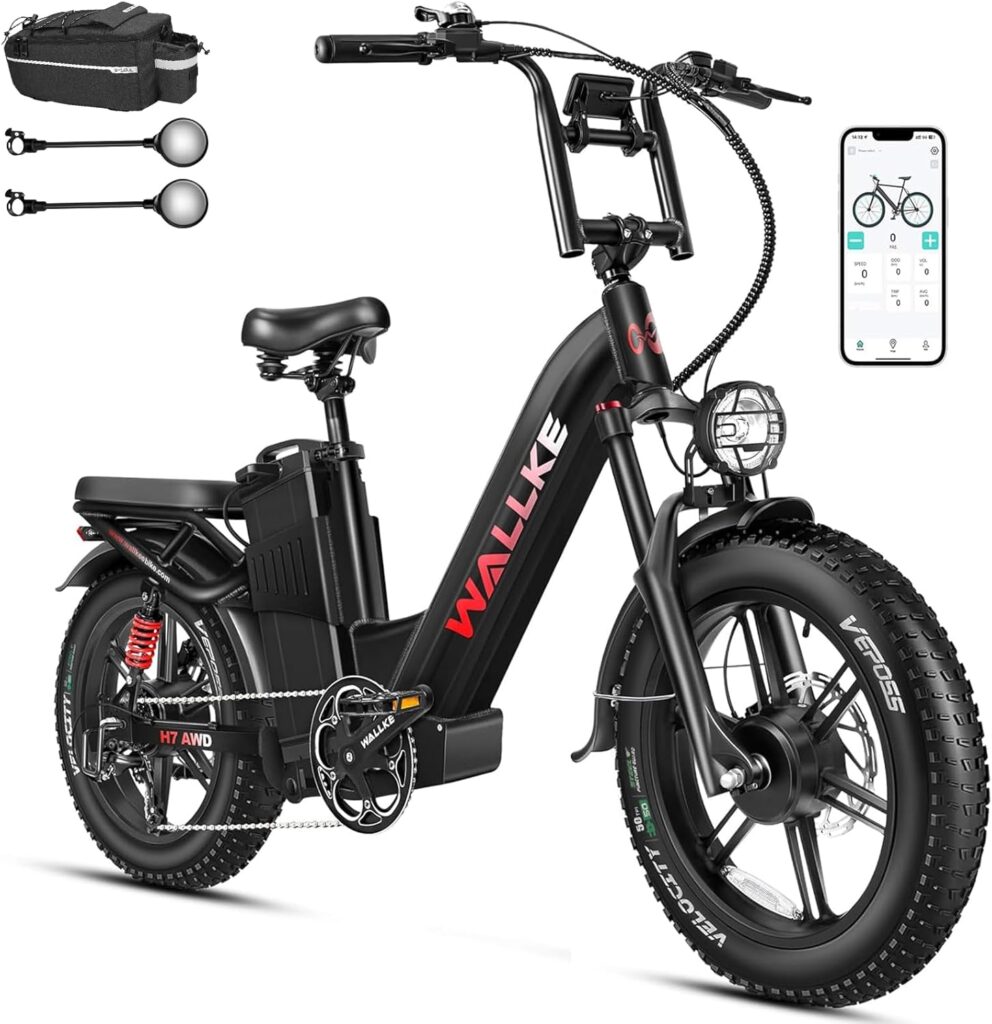
1. Best Overall Ebike for Hills: W Wallke AWD Dual Motor Electric Bike
Key Specifications:
- Dual 2000W hub motors (3200W peak)
- 48V 60Ah Samsung battery (up to 200 miles range)
- 20″ x 4″ fat tires with full suspension
- Top speed: 35 MPH
- UL 2849 certified with app control and 5 riding modes
If you ride steep terrain often, power consistency matters more than big numbers on a spec sheet. The W Wallke stands out because it keeps pulling even when climbs get long and demanding.
On extended mountain roads and short but sharp city hills, the dual motors deliver power smoothly instead of all at once. That makes a big difference on steep grades where sudden surges can throw off balance. The bike feels planted and predictable, whether you are climbing pavement or loose dirt.
The battery is the real highlight. The 60Ah Samsung pack is much larger than what most bikes offer, and it shows in real riding.
With mixed use and frequent elevation changes, range stayed strong without the sudden drop you feel once smaller batteries dip under load. For riders dealing with multiple climbs in a single outing, that reliability is hard to ignore.
Full suspension and wide tires help keep things controlled, especially on uneven surfaces and fast descents. The tradeoff is weight. This is not a bike that feels nimble in tight city spaces, and you will notice the bulk when maneuvering at low speed.
If your priority is tackling serious hills without worrying about power fade or battery stress, this bike is built for that job.
Pros:
- Exceptionally long range on a single charge
- Full suspension handles rough terrain with ease
- Torque-heavy motors for excellent hill climbing
- Customizable app and 5 riding modes
Cons:
- Heavy build can feel bulky in urban use
- May be too powerful (and pricey) for casual riders
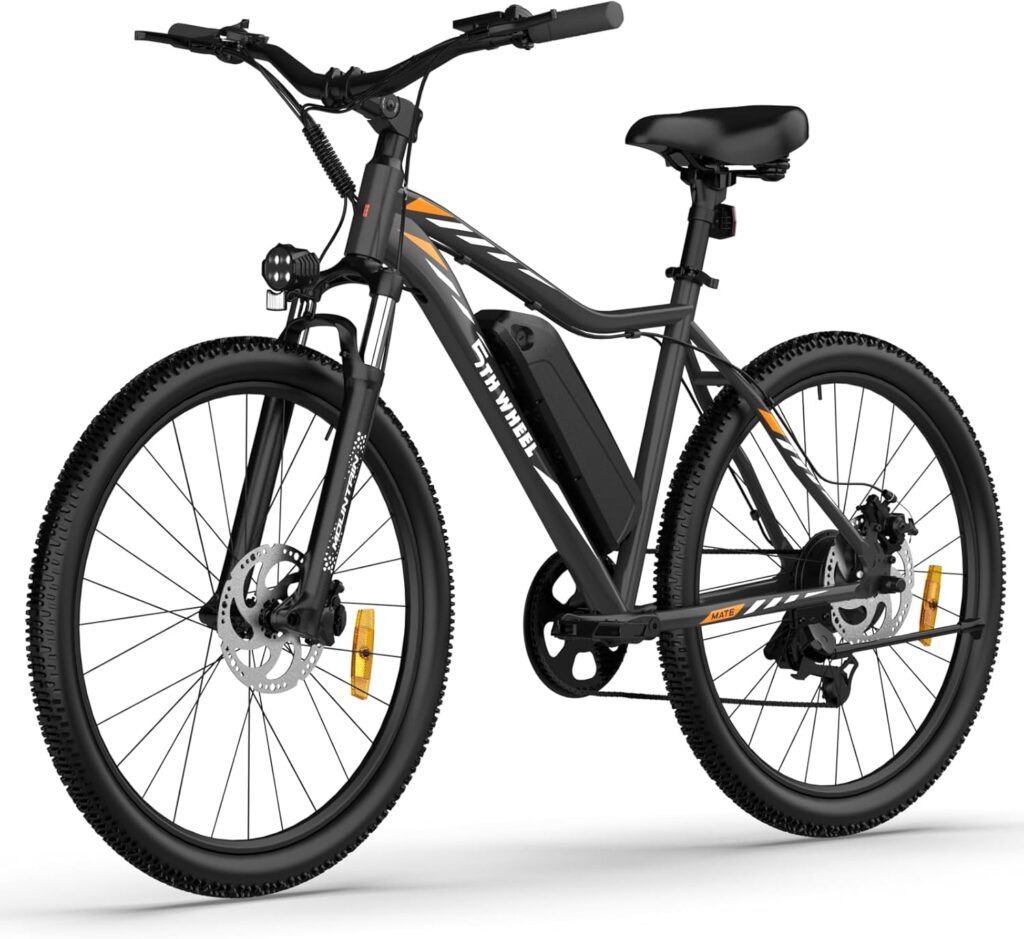
2. Best Budget Ebike for Hills: 5TH WHEEL Mate Electric Bike
Key Specifications:
- 500W motor (1000W peak)
- 48V 468Wh removable battery (25–45 mile range)
- Front suspension fork
- 26″ wheels, 7-speed gear
- Lightweight aluminum frame (50 lbs)
For riders on a tight budget, the main question is simple. Will it actually make hills easier?
From riding this bike on neighborhood slopes and daily commute routes, it does what you would expect at this price point. On moderate inclines, pedal assist feels smooth and predictable.
The motor supports your effort without sudden lag or jolts, which helps new riders stay comfortable on climbs.
The lighter frame plays a big role here. At around 50 pounds, it feels easier to guide uphill compared to heavier entry-level models. Steeper hills still require pedaling, and this is not the bike that carries you up long climbs on throttle alone. But for rolling terrain and city grades, it feels dependable.
Range is limited once you start climbing regularly, and the lack of rear suspension is noticeable on rougher roads. Still, for everyday hills and short rides, it holds its own.
If your routes include mild elevation and your budget is firm, this is a reasonable place to start.
Pros:
- Very lightweight and easy to handle
- Affordable entry point for hill riders
- LCD display and front headlight included
- Smooth pedal-assist for moderate inclines
Cons:
- No rear suspension for rough terrain
- Limited range and power on steeper climbs
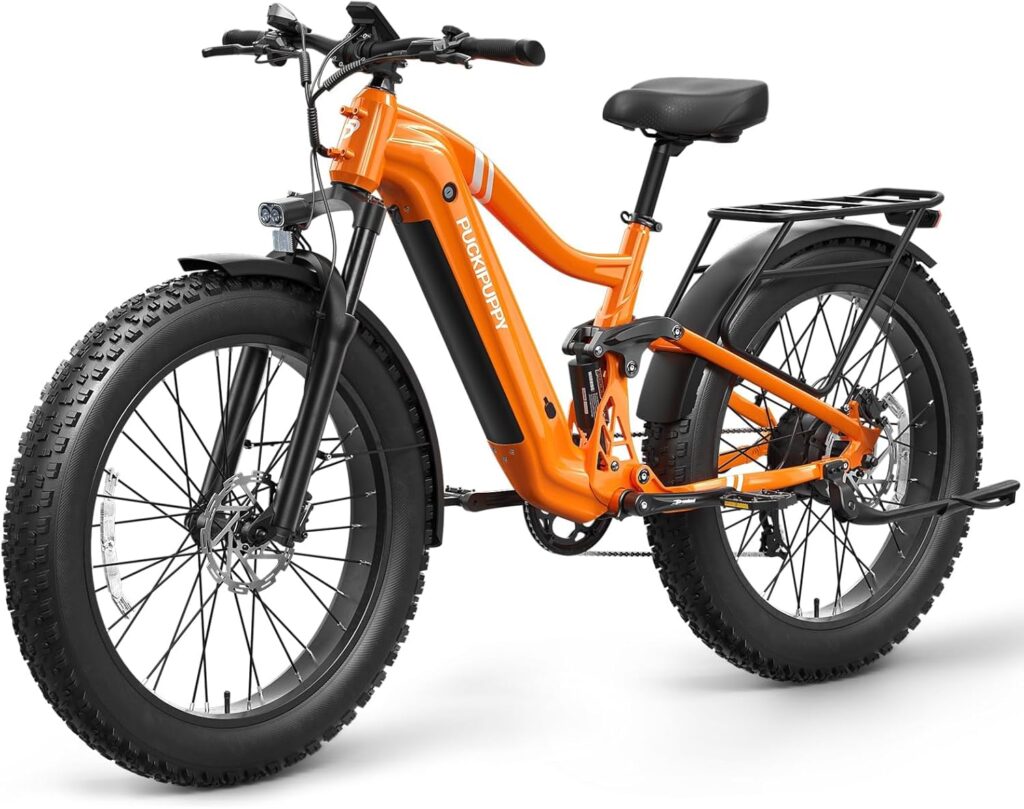
3. Best Suspension for Comfort: Boxer by PUCKIPUPPY Electric Bike
Key Specifications:
- 750W motor (960W peak)
- 48V 20Ah removable battery (40–80 mile range)
- Full suspension with 2026 longitudinal design
- 26″ fat tires, hydraulic brakes
- 7-speed gear system
Comfort becomes more important the longer you spend climbing. Stiff bikes wear you down fast, especially on uneven hills.
Riding the Boxer on broken pavement and rough uphill stretches, the suspension stood out immediately. The longitudinal suspension design smooths out small bumps that usually feel sharper at low climbing speeds. That makes a noticeable difference on longer rides.
Power delivery is calm and controlled. It does not jump forward when assist kicks in, which helps maintain balance on loose or uneven surfaces. On moderate hills, the bike holds speed well. On steeper grades, you still pedal, but the torque feels usable rather than strained.
Downhill control is another strong point. The suspension and hydraulic brakes work well together, keeping the bike settled on longer descents. This is not a speed-focused machine, but it is comfortable and confidence-inspiring.
If your rides prioritize comfort over outright power, this bike fits that mindset.
Pros:
- Extremely comfortable suspension system
- Comes with a full accessory kit including mirror and rack
- Great torque for hilly terrain
- Hydraulic disc brakes for reliable stopping power
Cons:
- Not as fast as other ebikes in this list
- Slightly bulkier frame may not suit smaller riders
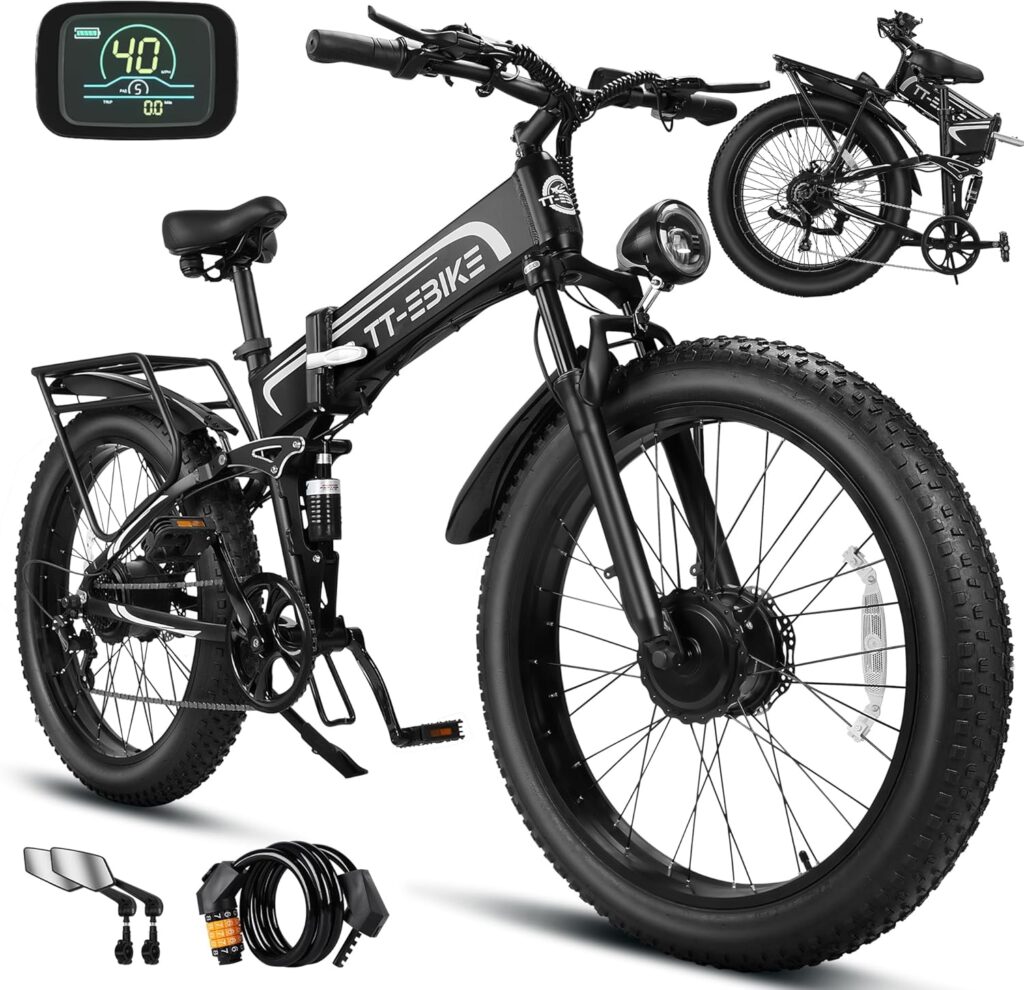
4. Best Folding Ebike for Hills: TT-EBIKE Dual Motor Folding Mountain E-Bike
Key Specifications:
- Dual 1500W motors (3000W total)
- 52V 28Ah battery (33–80 mile range)
- 26″ fat tires with dual suspension
- Folding aluminum frame
- Top speed: 40 MPH
Most folding bikes struggle once the road tilts up. This one does not, though it comes with tradeoffs.
On steep pavement, the dual motors pull hard and make climbs feel manageable instead of forced. Starting from a stop on an incline is easier than expected, which is where many folding designs fall short.
Despite the folding frame, the bike feels solid while riding. There is no noticeable flex during climbs, and downhill control feels secure thanks to suspension and strong brakes. Storage convenience is the big advantage here, especially for apartment living.
The downside is weight. Folding or not, this is a heavy bike, and carrying it up stairs is not something you will enjoy. The power delivery can also feel strong at first, so new riders may need time to adjust.
If you need compact storage but still face serious hills, this is one of the few folding options that truly works.
Pros:
- Folds down despite being a full-power hill climber
- Excellent range for long uphill commutes
- Includes bright LED lighting and storage accessories
- Smooth gear shifts even on inclines
Cons:
- A bit heavy for a folding bike
- LCD settings can be tricky to configure
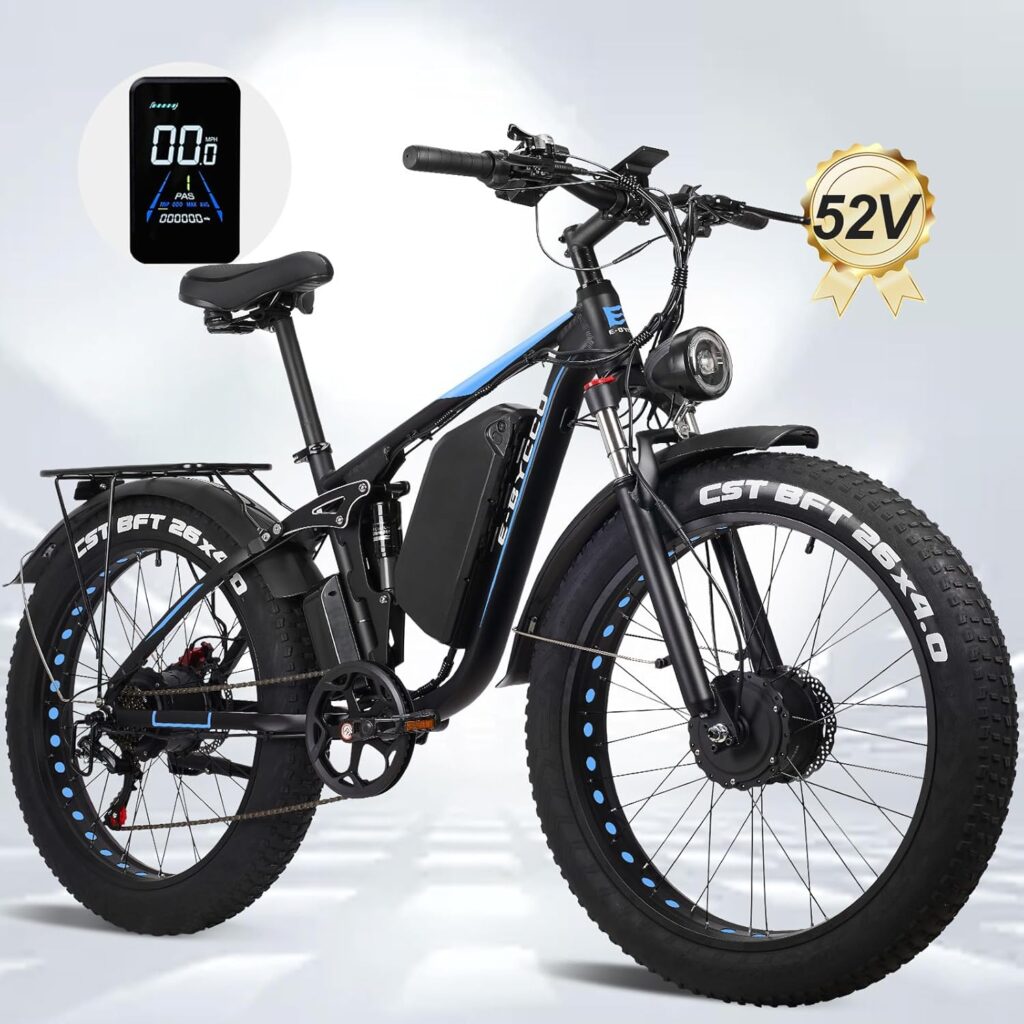
5. Best Power-to-Weight Combo: ECOCOGY 5000W Peak Electric Bike
Key Specifications:
- Dual 2500W motors (5000W peak)
- 52V 32Ah battery (up to 90 miles range)
- Full suspension with 26″ x 4″ fat tires
- Hydraulic disc brakes, LCD display
- Top speed: 45 MPH
The ECOCOGY EB7Pro is built for riders who deal with serious elevation and want power that does not fade halfway up the climb. On steep pavement and rough back roads, the bike pulls hard and keeps momentum without needing constant throttle input. That steady push matters when hills stretch longer than expected.
What surprised me most was how composed it feels for such a powerful machine. The suspension and wide tires keep the bike planted, even when climbing uneven surfaces or rolling back down at speed.
For riders who want an ebike for hills that can handle both sharp inclines and longer mountain routes, the balance here works well.
The large battery supports repeated climbs without the sudden range anxiety that smaller packs bring. That said, the weight is impossible to ignore. Moving it up stairs or loading it into a vehicle takes effort, and the top speed can feel like too much if you are new to high powered bikes.
This is a strong option for experienced riders who want power they can rely on, not something meant for casual cruising.
Pros:
- Great mix of range and raw motor power
- Handles steep hills and rugged terrain with ease
- Comes nearly fully assembled
- Advanced suspension for off-road comfort
Cons:
- Very heavy to move or lift
- Overkill for casual or first-time ebike riders
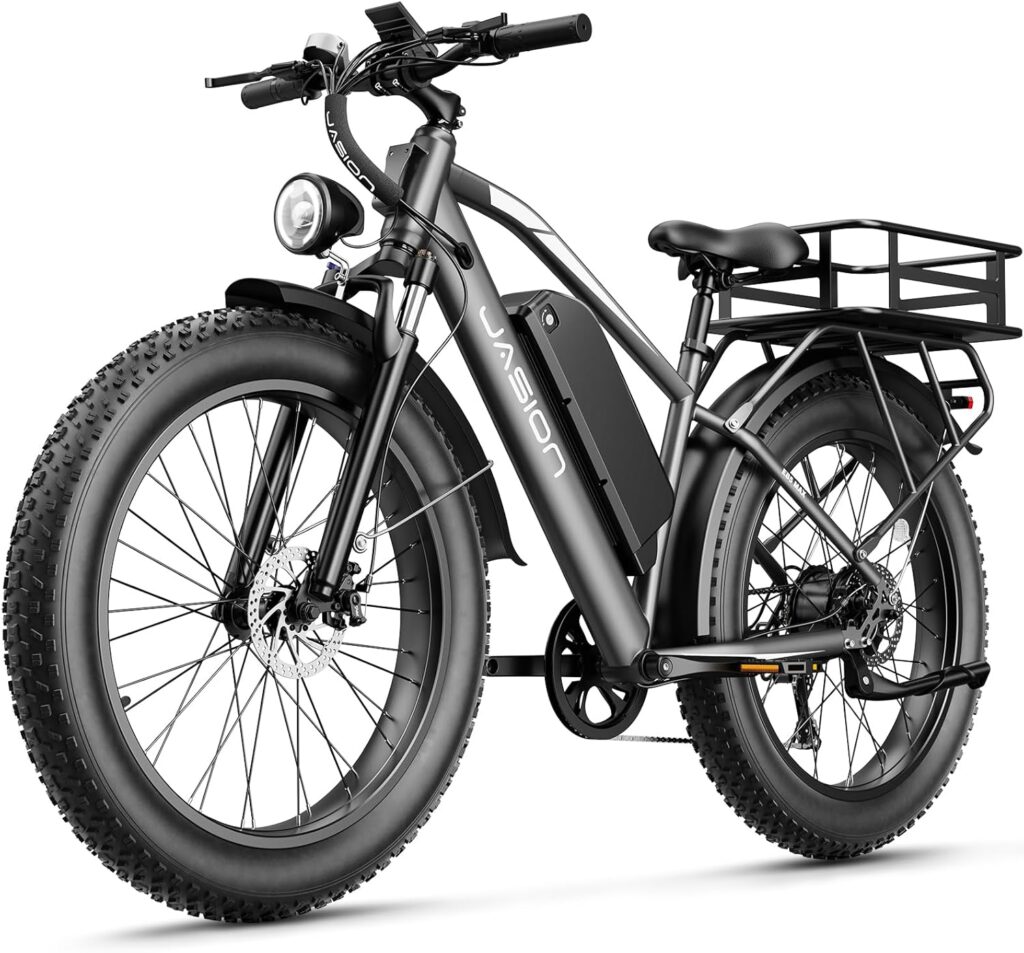
6. Best for All-Terrain Comfort: Jasion EB5 MAX Electric Bike
Key Specifications:
- 1500W peak motor
- 48V 15Ah (720Wh) battery
- Top speed: 28+ MPH
- 26″ x 4.0″ fat tires with front suspension
- Cruise control and color LCD display
The Jasion EB5 MAX feels like a bike designed for real day to day riding where hills are part of the route, not the whole challenge. On city slopes and mixed surfaces, the motor provides steady support without feeling aggressive or unpredictable.
Climbing moderate hills feels smooth, especially when paired with the wide tires that help maintain grip on loose gravel or uneven pavement. This ebike does not rush you uphill, but it keeps the effort manageable and consistent. Cruise control is useful on longer grades where holding steady speed reduces fatigue.
You do notice the lack of rear suspension on rougher trails. Sharp bumps come through more than they would on a full suspension setup. Still, for paved climbs and light off-road use, it stays comfortable and easy to ride.
If your hills are frequent but not extreme, this bike strikes a good balance between comfort, price, and everyday usability.
Pros:
- Excellent grip and comfort from fat tires
- Great battery life for this price range
- LCD display with cruise control is super user-friendly
- Pre-installed fenders and rear rack add utility
Cons:
- No rear suspension
- May not be enough power for very steep inclines
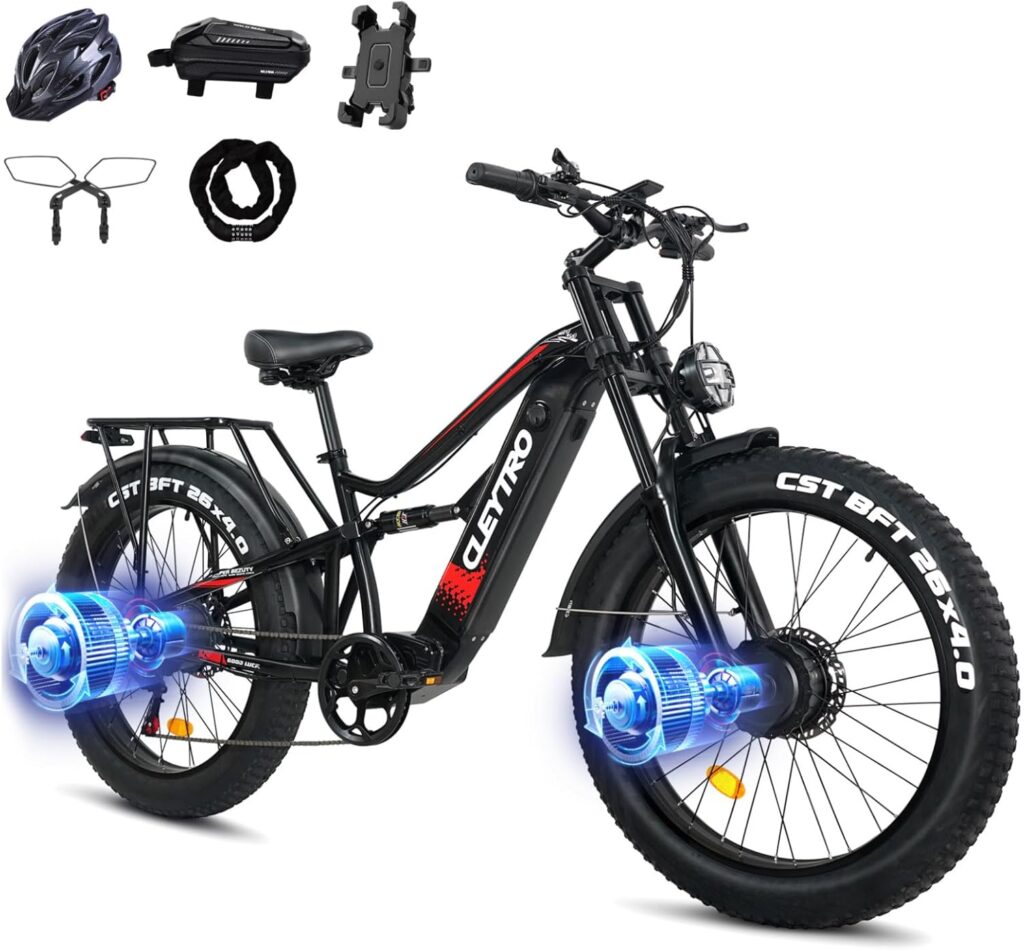
7. Best Mid-Range Dual Motor Option: Cleytro ES7PRO Electric Bike
Key Specifications:
- 1500W dual motor (80Nm x 2 torque)
- 52V 21Ah removable battery
- 26″ fat tires with full suspension\
- Top speed: 37 MPH
- Hydraulic disc brakes
The Cleytro ES7PRO sits in a practical middle ground. It offers dual motor assistance without jumping into extreme power territory, which makes it easier to control on real hills.
On steeper grades, acceleration feels confident but not overwhelming. The bike climbs smoothly and stays composed when speed drops, which is often where cheaper setups struggle. For riders looking for an ebike for hills that balances strength with control, this one feels well-tuned.
Downhill performance is another strong point. Hydraulic brakes and full suspension work together to keep the ride stable when coming back down long slopes. Battery capacity is enough for weekend rides with elevation, though the included accessories feel more like extras than essentials.
This is a solid choice for riders who want dependable climbing performance without jumping to oversized motors or extreme speeds.
Pros:
- Impressive speed and torque for steep climbs
- Comfortable full-suspension ride
- Brakes perform well even on long downhills
- Long battery life for weekend adventures
Cons:
- Included accessories aren’t very durable
- Slightly heavier than it looks online
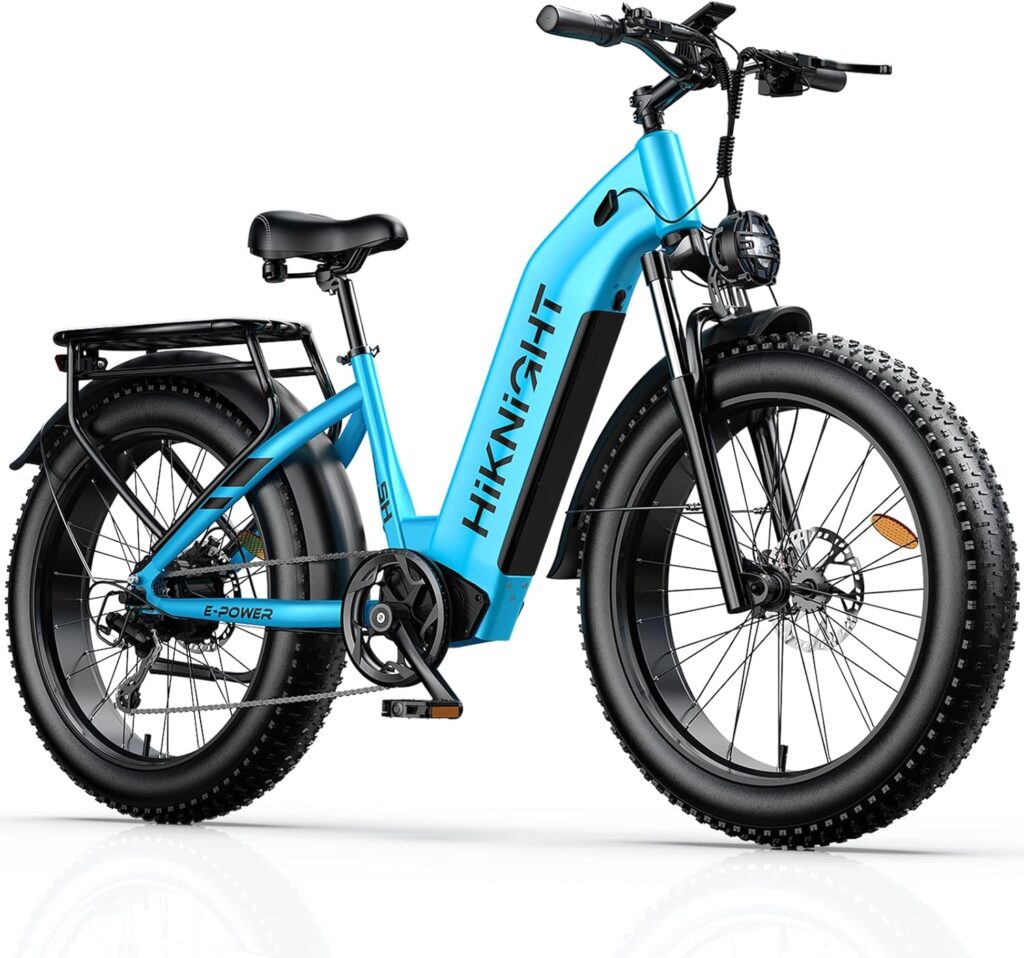
8. Best Step-Thru for Steep Hills: HiKNiGHT H2 Step-Thru Electric Bike
Key Specifications:
- 1000W rear motor (1600W peak)
- 52V 20Ah removable battery (up to 60 miles PAS)
- Top speed: 32 MPH
- 26″ x 4.0″ fat tires
- Front suspension and hydraulic disc brakes
The HiKNiGHT H2 stands out because it combines a step thru frame with real climbing ability. Mounting and stopping on hills feels easier, especially for riders who prefer a lower frame or deal with frequent starts on inclines.
On city hills and longer paved climbs, the motor provides solid push without feeling jumpy. The battery holds up well when elevation is part of every ride, which makes this electric bike for hills practical for daily use rather than just weekend trips.
Front suspension and wide tires help with comfort, though rough trails expose the limits of a front only setup. At higher speeds, load balance matters, especially when carrying gear.
Still, for riders who want a more approachable frame without giving up hill performance, it fills an important gap.
Pros:
- Easy-to-mount frame without sacrificing power
- Great battery capacity for longer rides
- Excellent lighting and turn signals for night hills
- Comes with useful accessories like a lock and pump
Cons:
- No rear suspension for full off-road comfort
- Slight wobble at top speeds if not loaded evenly
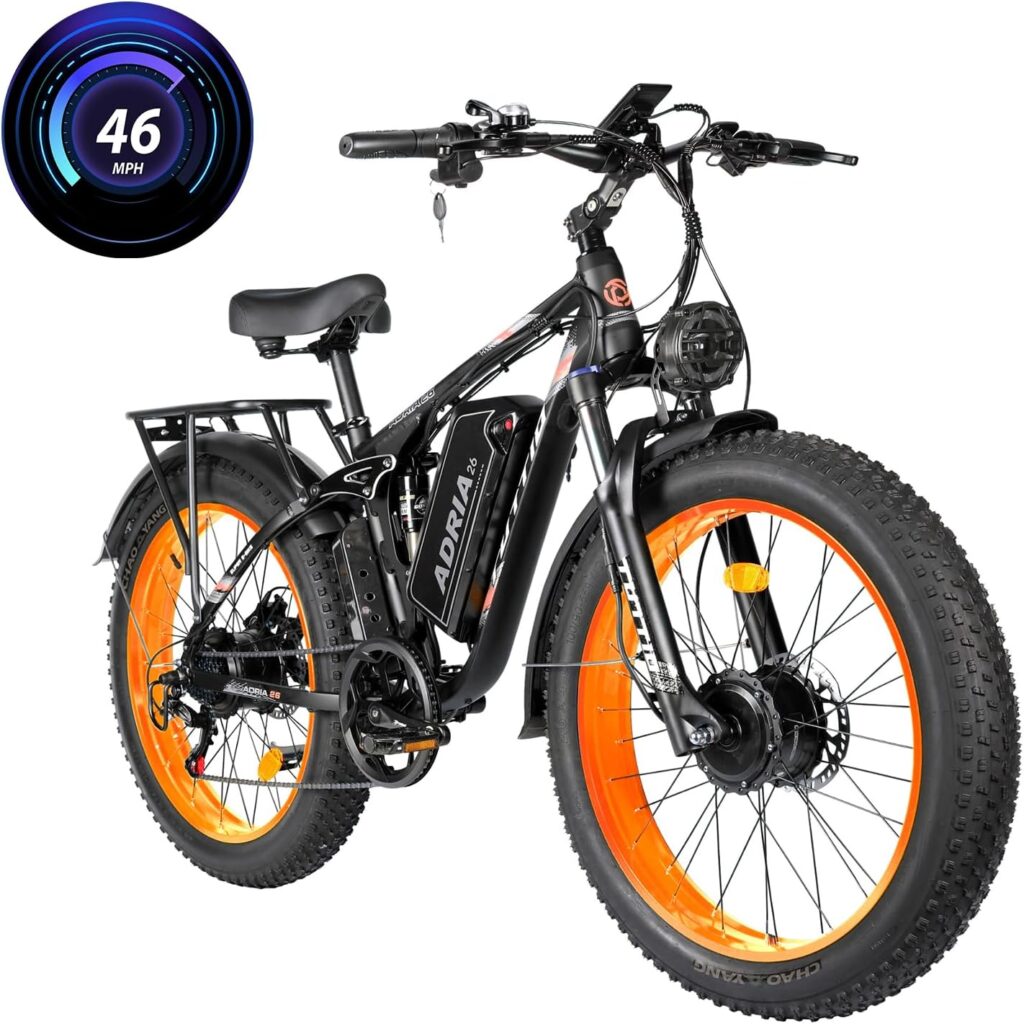
9. Best for Heavy-Duty Trail Climbing: PHNHOLUN Tuttio Dual Motor E-Bike
Key Specifications:
- Dual 2500W motors (5000W peak)
- 52V 30Ah battery (up to 90+ miles PAS)
- 26″ fat tires, full suspension
- Top speed: 46 MPH
- 6 riding modes and hydraulic brakes
The PHNHOLUN Tuttio is built for riders who regularly point their bike at rough terrain and do not want to worry about running out of power halfway up. On loose trails and long climbs, it keeps pulling without hesitation, even when the surface gets uneven or soft.
What stands out right away is how composed it feels under load. The suspension does a good job of taking the edge off rocks and ruts, and the motors keep steady pressure on the climb instead of surging.
For riders looking for an ebike for hills that leans more toward trail riding than casual commuting, this one feels purpose built.
The battery capacity supports longer outings with repeated climbs, which matters if you ride far from pavement. Heat management also feels better than expected on extended uphill runs. The downside is size and weight. This is not something you casually move around or squeeze into small storage spaces.
If your riding includes dirt, snow, sand, or steep backcountry terrain, this bike is made for that environment.
Pros:
- Absolute powerhouse for steep mountain roads
- Huge battery keeps you riding all day
- Responsive and safe hydraulic brakes
- Handles sand, snow, and mud with no problem
Cons:
- Very heavy and bulky
- Too powerful for some riders’ comfort level
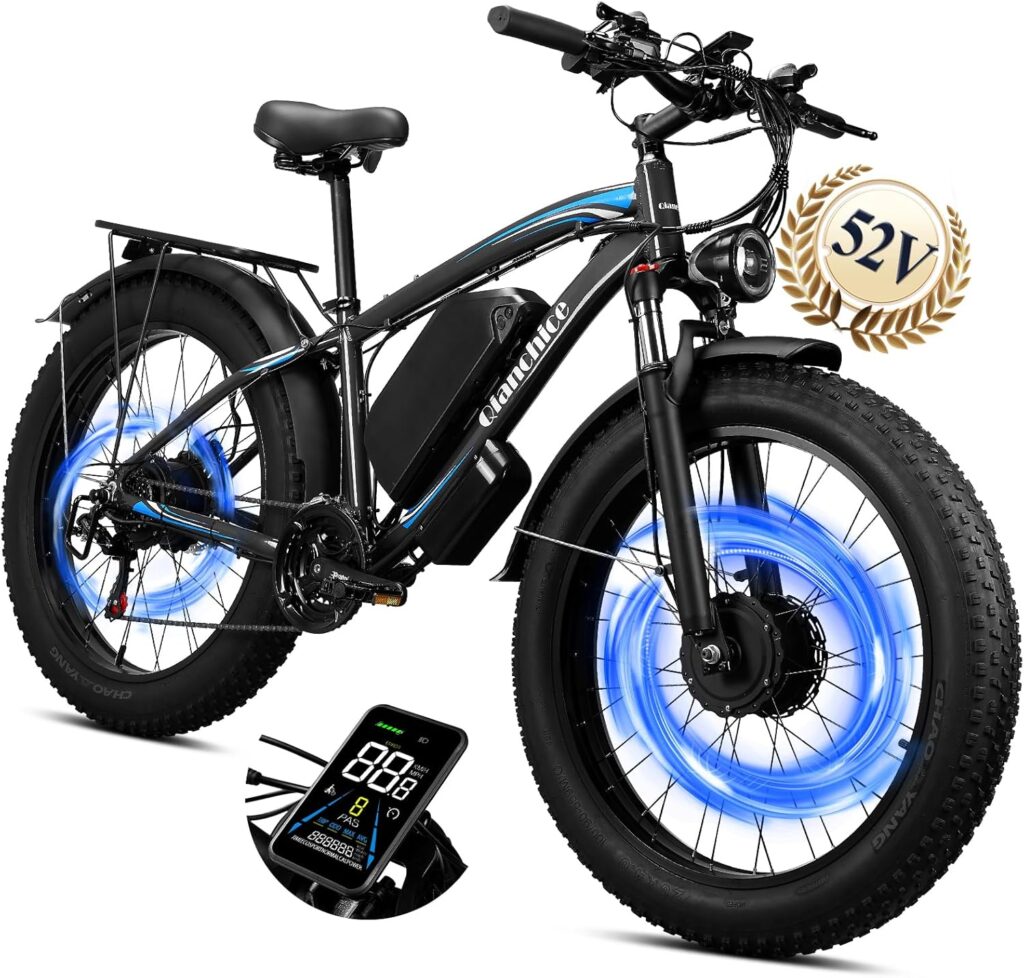
10. Best for Gear Variety and Control: Qianchice Q9Pro 3000W Electric Bike
Key Specifications:
- Dual 1500W motors (3000W peak)
- 52V 23Ah battery (up to 87 miles PAS)
- 26″ x 4.0″ fat tires with dual suspension
- 21-speed gear system
- Top speed: 37 MPH
The Qianchice Q9Pro appeals to riders who like having control over how a bike climbs, not just relying on motor power alone. The combination of dual motors and a wide gear range gives you more options when terrain changes quickly.
On steep hills, being able to fine tune gearing helps keep cadence comfortable while the motors do their share of the work.
This electric bike feels especially useful on mixed routes where pavement turns into gravel or the grade changes without warning. The power delivery feels smooth rather than aggressive, which makes longer climbs easier to manage.
Battery life is solid for extended rides with elevation, and the display stays readable even when the surface gets rough. Setup takes a bit more patience, and the menu controls are not the most intuitive at first. Once dialed in, though, the system works well.
This bike makes sense for riders who value flexibility and like adjusting their ride rather than letting the motor do everything.
Pros:
- Gear shifting gives precise control on hills
- Smooth and powerful ride even with added weight
- Includes phone charger and large display
- Tough tires for mixed surfaces
Cons:
- Setup takes a little more time
- LCD menu isn’t beginner-friendly
11. Best for Customizable Power Modes: Lanshanchu Dual Motor AWD Electric Bike
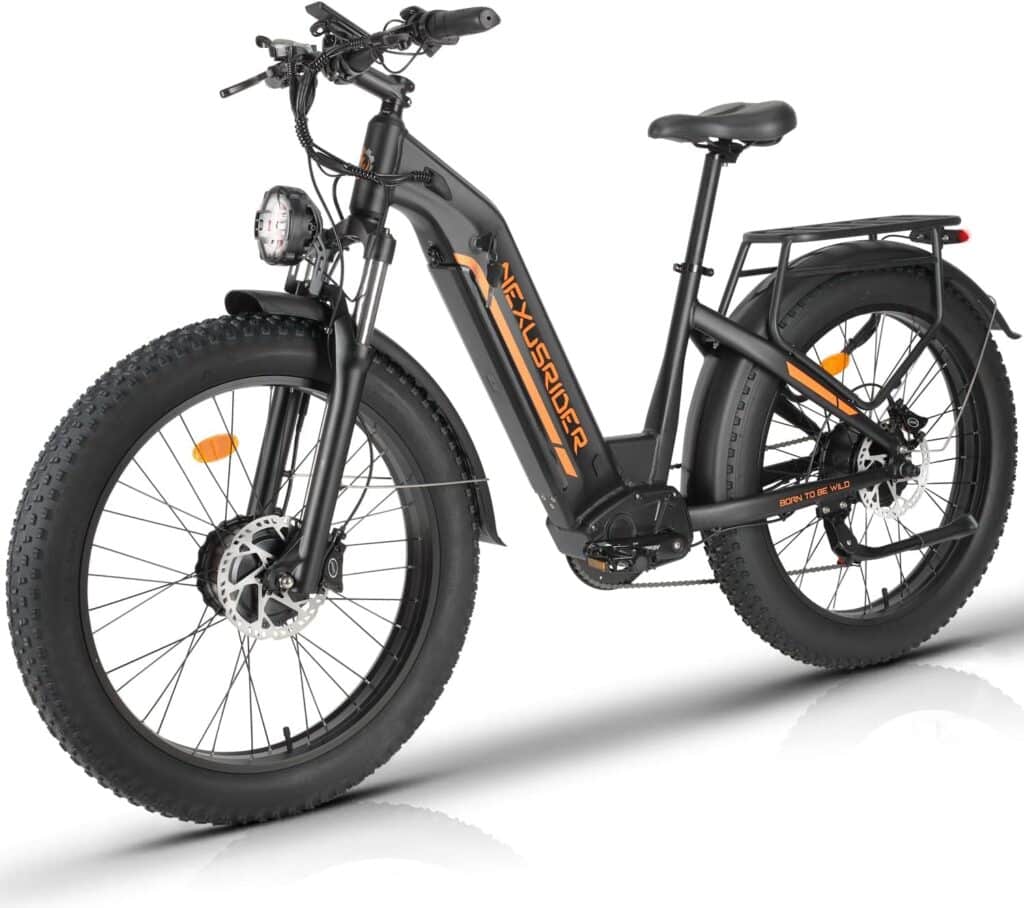
Key Specifications:
- Dual 1000W brushless motors (3000W peak)
- 48V 21Ah removable lithium battery (40–52 miles range)
- 26″ x 4″ fat tires with full suspension
- 35 MPH top speed
- 4 riding modes + 7-speed gear system
The Lanshanchu AWD stands out because it lets you decide how much power you want to use, and when. Being able to switch between single and dual motor modes is useful on longer rides where managing battery matters just as much as climbing ability.
On hills, the bike feels confident without being overwhelming. Single motor mode works well for moderate grades, while dual motor mode provides extra push when the climb steepens. That flexibility makes this a practical ebike for hills if your routes vary from day to day.
Suspension and wide tires help smooth out rough pavement and light trails, and braking feels predictable on descents. The included accessories are genuinely useful, not just filler. Weight is noticeable, especially in city riding, and the display can be hard to see in bright sunlight.
For riders who want control over how their bike behaves on different terrain, this model offers a thoughtful balance.
Pros:
- Switchable AWD system for better battery control
- Handles a wide range of riding surfaces with ease
- Solid hydraulic brakes and full suspension combo
- Comes with a great accessory bundle
Cons:
- Slightly bulky and heavy for urban riders
- Display can be hard to read under bright sun
How We Evaluated These Ebikes for Hills
We did not rank these bikes based only on spec sheets or brand claims. Hills expose weaknesses fast, so our focus was how each bike behaves when the road actually tilts up and stays there.
Most bikes were ridden on a mix of steep city streets, longer uphill stretches, and uneven back roads. We paid attention to how power comes in at low speed, how stable the bike feels when climbing slowly, and whether performance drops once the battery starts working harder under load.
What we looked for during hill riding:
- How smoothly the motor delivers power on steep starts
- Whether the bike holds speed or bogs down halfway up
- Battery behavior during repeated climbs, not just short bursts
- Control and braking confidence on long descents
We also factored in rider comfort and practicality. A bike that climbs well but feels unstable or exhausting to ride is not helpful in real life. Weight, balance, suspension behavior, and ease of control all played a role in our final picks.
When manufacturer claims did not match real world behavior, we leaned on riding impressions instead. Range, speed, and torque can vary a lot based on rider weight, terrain, temperature, and riding style. Our goal was not lab numbers, but honest guidance based on how these ebikes perform when hills are part of your normal route.
What Makes an Electric Bike Good for Hills?
A good electric bike for hills needs a strong motor, high torque, a large battery, and stable suspension to climb steep terrain without struggle.
Riding uphill isn’t just about speed. It’s about how well the ebike supports you through the climb, keeping you steady, powered, and in control. Some bikes are made for flat roads. Others are built to handle elevation and rough terrain.
If you’re regularly facing steep grades, here’s what you should look for:
- Motor power (watts): Higher wattage means stronger support. Look for at least 750W for steep hills. Dual motors or 1000W+ setups are better for mountain roads.
- Torque (Nm): Torque helps the bike push uphill without you doing all the work. For hilly terrain, 80Nm or higher is ideal.
- Battery size (Ah or Wh): A bigger battery gives more consistent power over long climbs. Look for 48V 15Ah or larger for reliable hill performance.
- Suspension system: Full suspension helps absorb bumps and keeps you stable, especially on rough or uneven trails.
- Fat tires: Wider tires offer better grip and balance on gravel, dirt, or slick hillsides, making the climb safer and smoother.
How to Choose the Best Ebike for Hills
Choosing the right ebike for steep hills comes down to how often you climb and how hard those climbs really are. A short uphill stretch on a commute is very different from long, steep grades that keep going for minutes at a time.
Start by thinking about your normal routes, not worst-case scenarios you ride once a month.
Steep Hills or Mild Elevation
If you live in an area with sharp, sustained climbs, power matters. Bikes with higher peak output or dual motors tend to hold speed better and feel less strained halfway up.
Torque is just as important. More torque means the bike can keep moving at low speed without forcing you to mash the pedals.
For gentler city hills or rolling neighborhoods, you do not need extreme power. A mid-range motor with pedal assist can handle moderate inclines just fine, especially if you are comfortable contributing some effort.
Trail Riding vs City Streets
Where you ride changes what feels comfortable on a climb. Dirt, gravel, and uneven surfaces demand more grip and stability. Wider tires help maintain traction, and suspension reduces fatigue when the climb is rough.
On paved roads, lighter setups feel quicker and easier to manage. Front suspension is often enough, and narrower tires roll faster uphill without feeling sluggish.
Ride Distance and Battery Needs
Climbing uses more battery than flat riding. If your routes include repeated hills or longer distances, a larger battery helps prevent a sudden power drop late in the ride. Smaller batteries work fine for short climbs, but they drain faster once the elevation becomes constant.
A removable battery is also worth considering if you charge indoors or live upstairs.
Storage and Portability
Powerful hill-capable ebikes are rarely light. Folding models save space, but they still carry significant weight. Before buying, think about where the bike will live and how often you will need to lift it.
Measure storage space and trunk clearance. Do not assume portability just because a bike folds.
New Riders and Power Control
If you are new to ebikes, controllability matters more than raw strength. Too much power can feel uncomfortable on steep starts or tight turns. Bikes with multiple assist levels let you build confidence gradually.
Step-through frames also make stopping and starting on hills easier, especially when balance matters.
Safety Tips for Riding Ebikes on Hilly Terrain
Hills change how an ebike behaves, especially on the way down. A few small habits make a big difference.
- Use both brakes evenly on descents to stay stable
- Shift to a lower gear before climbing to reduce motor strain
- Check tire pressure often for grip and control
- Slow down before corners, especially on gravel or wet pavement
- Keep battery levels in mind on long climbs
- Wear a helmet and stay visible on winding roads
Final Words
If you’re regularly riding in hilly areas, having the right ebike makes all the difference. From strong motors and high torque to solid suspension and grippy tires, the right setup can turn steep climbs into smooth rides.
Whether you’re commuting through a city full of rolling hills or exploring rough mountain trails, there’s an electric bike out there for you.
If you want serious power and all-terrain performance, the W Wallke Dual Motor Electric Bike is a top-tier choice. It handles hills like a champ and goes the distance.
No matter which you choose, a good ebike with strong hill-climbing ability makes every uphill ride a little more enjoyable.
FAQs
Can electric bikes really climb steep hills?
Yes, many electric bikes can climb steep hills—especially models with high motor wattage (like 750W or more) and strong torque. Dual motor setups or mid-drive motors handle inclines even better.
Are mid-drive motors better for hills than hub motors?
In most cases, yes. Mid-drive motors use the bike’s gears to maintain efficiency, which helps a lot when climbing. They also provide better balance and traction on steep slopes.
How much torque do you need for climbing?
For moderate hills, around 60–80Nm is usually enough. For steep or long climbs, aim for 85Nm or more for smoother, easier riding.
Do fat tires help with hill climbing?
They can. Fat tires improve grip and stability, especially on loose surfaces like dirt or gravel. They also add comfort when going up or down bumpy hills.
What’s the average range when riding uphill a lot?
Range drops faster when climbing. If a bike gets 60 miles on flat terrain, you might only get 30–40 miles with a lot of uphill riding. Bigger batteries (20Ah or more) help maintain better range.

Michael Josh is a hands-on e-bike tester and reviewer at BoltBikers, known for putting every model through real-world rides before sharing his thoughts. With a sharp eye for performance, comfort, and build quality, he helps the team choose which bikes are worth featuring. Backed by years of experience in tech and gear reviews, Michael brings trusted, honest insights to help readers find the right e-bike for their needs.