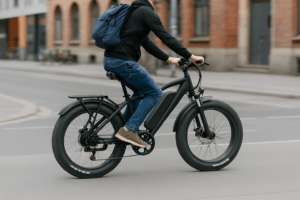
The Jasion EB5 is still a smart buy in 2026 if you want a cheap, simple e-bike for flat city riding and short trips. It is not built for steep hills or long daily commutes, but for under $500, it does the basics well for the right rider.
I rode the Jasion EB5 for about two weeks, logging roughly 60 to 70 miles on short city trips, errands, and casual rides on mostly paved roads.
If your goal is light commuting, grocery runs, or casual rides around town, the EB5 still makes sense. If you expect strong hill climbing or long, all-day riding, this is not the right bike.
Some of the links on this site are affiliate links. This means we may earn a commission if you make a purchase through them, at no extra cost to you.
Who This Bike Makes Sense For
Before looking at specs, it helps to know who this bike is really built for.
The Jasion EB5 works best for riders between about 5′4″ and 6′2″. Riders under 200 pounds will get the best performance, especially on mild hills. Heavier riders can still use it, but acceleration and range will drop a bit.
This bike fits riders who stick to paved roads, bike lanes, and smooth city paths. Most of my riding was in light to moderate city traffic, with cracked pavement, frequent stoplights, and uneven road patches you would expect in everyday urban riding.
It is not designed for trails, sand, or rough terrain. The motor and tires are tuned for steady cruising, not aggressive riding.
A real-life example. If you live in an apartment, ride 2 to 3 miles to work, stop by the grocery store on the way home, and charge the battery indoors at night, the EB5 fits that routine very well. This kind of use is where it feels comfortable and reliable.
What Living With the Jasion EB5 Is Like
I used the Jasion EB5 for a little over two weeks, riding it almost daily on short city trips. Most rides were between two and five miles, mostly flat roads with a few mild hills and plenty of stoplights.
Charging became part of my nightly routine. I removed the battery and charged it indoors, usually every other day. Plugging it in after dinner meant it was always full by morning. That convenience matters more than it sounds, especially if you do not have a garage.
One inconvenience was the pedal assist behavior at higher levels. PAS 3 can kick in suddenly after a stop, which took some getting used to. I learned quickly to stay in PAS 1 or 2 for city traffic, which felt much smoother and more predictable.
The pleasant surprise was how manageable the bike felt off the motor. When riding without assist, it did not feel awkward or unstable, just heavier than a normal bike. That made short dead battery rides less stressful than I expected.
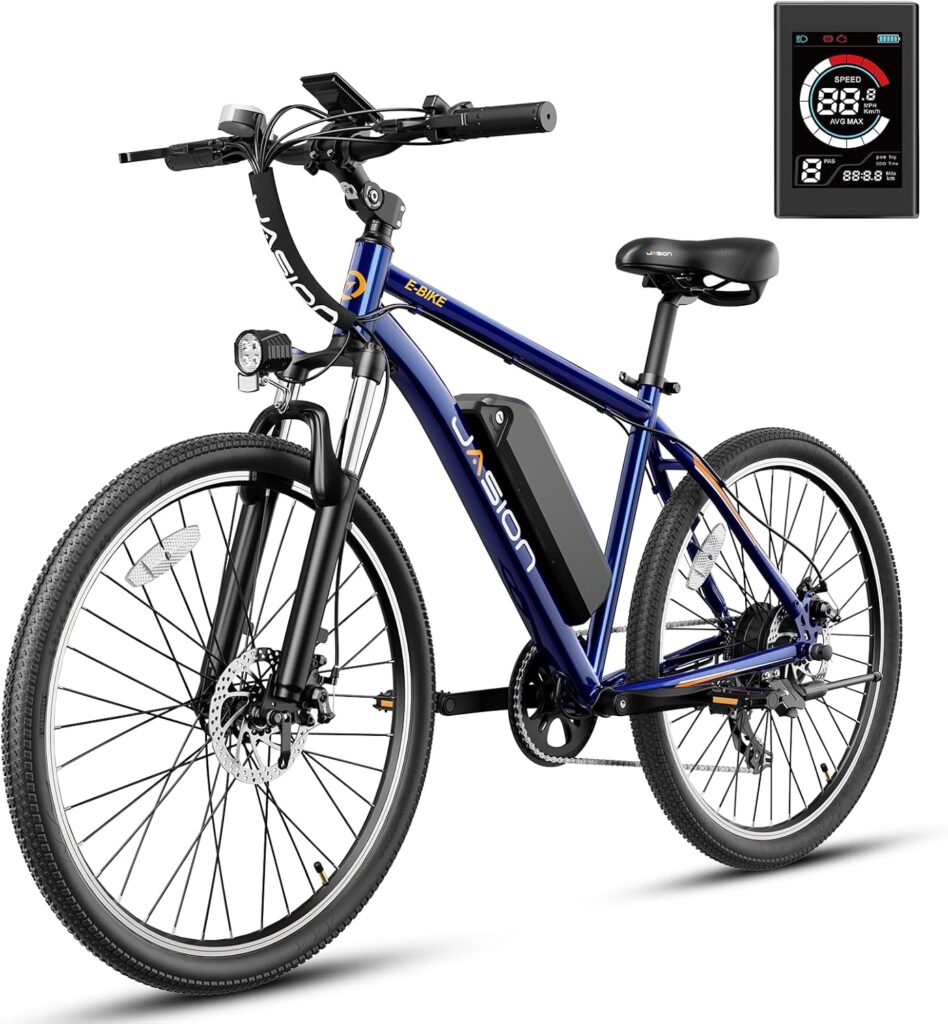
Jasion EB5 Electric Bike Overview
| Feature | Details |
|---|---|
| Motor | 350W brushless, 500W peak |
| Battery | 36V 10Ah, removable |
| Claimed range | 25 to 40 miles per charge |
| Top speed | 20 mph |
| Weight | About 50 pounds |
| Brakes | Mechanical disc, front and rear |
| Gearing | Shimano 7 speed |
| Suspension | Front fork only |
Real World Performance (What It Feels Like, Not Just Numbers)
Real-world performance is where the Jasion EB5 becomes easy to understand. Instead of focusing on specs, this section explains how the bike actually feels when starting, climbing, and riding in everyday city conditions.
Motor and Acceleration
At a stoplight, the Jasion EB5 feels quick enough but not aggressive. When the light turns green, the bike rolls forward smoothly in PAS 1 and PAS 2. It does not lurch, and you have time to get your feet settled before the motor fully kicks in.
PAS can feel jumpy at higher levels because the motor delivers power all at once instead of easing in gradually. In PAS 3, the assist comes on strong as soon as you start pedaling.
If you are not ready for it, especially in traffic or tight spaces, it can feel sudden. This is why PAS 1 or 2 feels more natural for city riding.
You will notice the power limit if you expect fast acceleration or a strong pull at higher speeds. This matters most when riding in traffic or climbing while already moving, because once you reach cruising speed, the motor adds very little extra help.
Once you are close to top speed, the motor stops helping much. Lighter riders will feel fine with this. Heavier riders or anyone used to stronger motors will feel the bike run out of push sooner.
Hills and Load Handling
The EB5 handles gentle hills without much trouble. Short rises, parking garage ramps, and rolling inclines are fine, especially if you stay in PAS 2 and keep pedaling.
It slows down on longer or steeper hills because the motor is tuned for cruising, not climbing.
You will feel the bike lose speed halfway up, and you will need to pedal harder to keep moving. This happens more with throttle-only riding since the motor is doing all the work.
Rider weight makes a noticeable difference. Riders under 180 pounds will climb moderate hills with less effort. As weight goes up, the bike feels more strained on climbs, and speed drops sooner. It still gets you up the hill, but you should expect to work for it.
Further reading: Best e-bike for hills in 2026
Battery Life in Daily Use
Battery range depends a lot on how you ride, not what the box says. In everyday use, I found the range to be predictable once you understand the pattern.
Using mostly PAS 1 and PAS 2 with steady pedaling, the battery comfortably covered about 30 to 35 miles on flat city routes. Short trips with frequent stops did not drain it as fast as I expected.
Throttle-only riding changes everything. When relying mostly on the throttle, the range dropped closer to 12 to 15 miles. Hills, heavier riders, and strong headwinds push that number lower.
Charging in real life was simple. Plugging the battery in after dinner meant it was fully charged by morning. It usually took about 5 to 6 hours from low to full. Being able to remove the battery and charge it indoors was one of the most practical features, especially for apartment living.
| Riding style | Realistic range |
|---|---|
| PAS 1 to 2 with pedaling | 30 to 35 miles |
| Mixed PAS and throttle | 20 to 25 miles |
| Throttle only | 12 to 15 miles |
Comfort, Ride Feel, and Build Quality
The riding position is upright and relaxed. You are not leaning forward aggressively, which helps on short commutes and casual rides. After riding for a while, your back and shoulders feel natural, not strained.
Seat comfort is fine for rides under 45 minutes. After that, you start to notice pressure, especially on longer stretches. It is not uncomfortable, but it is not plush either. Many riders will want to swap the seat if they plan longer rides.
The front suspension helps more than you might expect. Cracked pavement, potholes, and curb edges feel muted instead of jarring. It does not feel loose or bouncy, just firm enough to take the edge off rough roads.
I did not notice frame flex while riding, even when braking hard. There were no creaks during normal use. After a few rides, the brakes made a slight rubbing sound until adjusted, which is common on budget bikes and easy to fix.
Controls, Display, and Rain Reality
Changing PAS levels while riding is easy. The buttons sit close to your left thumb, so you can adjust assist without taking your hand off the bar. This matters more than you think in traffic.
The twist throttle feels smooth but not very precise. It works well for quick starts or short boosts, but fine control takes practice. Some riders may prefer a thumb throttle, but this one does the job.
The display is clear during the day and easy to read at night once the backlight is on. Speed, battery level, and assist mode update quickly without lag. It feels simple and reliable, not flashy.
IPX4 water resistance means light rain is fine. Riding through drizzle or wet streets did not cause any issues. That said, this bike is not meant for heavy rain or deep puddles.
I would not leave it outside during storms or wash it with direct water spray. Treat it like a normal bike with electronics, cautious but not fragile.
The Good and the Trade-offs
After using the Jasion EB5 in everyday riding, the strengths and limits become clear pretty quickly. It does some things very well for the price, and a few things remind you that this is still a budget e-bike. Knowing both sides upfront helps set the right expectations.
What I Genuinely Liked
- Simple, predictable city riding: On flat roads, the bike feels easy to live with. PAS 1 and 2 are smooth and make stop-and-go traffic less tiring without feeling out of control.
- Removable battery convenience: Being able to take the battery inside to charge made daily use much easier, especially without a garage. This alone solves a real problem for apartment riders.
- Lightweight feel for an e-bike: At around 50 pounds, it is easier to move, park, and handle than many other e-bikes in this price range.
- Front suspension actually helps: Cracks, potholes, and rough pavement feel less harsh. It does not feel fancy, but it makes daily rides more comfortable.
What Could Be Better:
- Pedal assist can feel sudden at higher levels: PAS 3 kicks in fast and can feel abrupt if you are not expecting it. This is manageable but takes some adjustment.
- Seat comfort drops on longer rides: As mentioned earlier, the seat is fine for short trips, but after about 45 minutes, pressure becomes noticeable for longer stretches.
- Out-of-the-box setup needs attention: Brake alignment and small adjustments are often needed before the bike feels right.
Ownership Risks to Know Before Buying
This is the part many reviews gloss over, but it matters if you plan to keep the bike longer than a few months.
Assembly is not difficult, but it is not plug-and-play either. If you have basic bike tools and patience, you will be fine. If not, a quick bike shop tune-up is worth budgeting for.
Customer support is mixed. Some riders report quick replies, others wait longer for parts or answers. I would not expect premium-level service at this price.
Replacement parts like brake pads, tires, and chains are easy to find. Brand-specific electrical parts may take longer if you ever need them.
If you plan to ride often, budget for small upgrades over time. A better seat, stronger tires, and possibly brake adjustments will improve long-term comfort and reliability.
Alternatives You Should Consider Instead
If your riding needs fall outside what the EB5 does best, there are better options.
If you ride hills daily, look at e-bikes with stronger motors designed for climbing. They cost more, but they reduce effort and frustration on longer inclines.
If you want easier mounting and comfort, a step-through e-bike makes sense. These are better for frequent stops, errands, and riders who value ease over a sporty feel.
Only consider alternatives if they solve a real problem you will face. Otherwise, the EB5 already covers the basics well.
Final Verdict After Real Use
The Jasion EB5 is a solid choice for riders who want an affordable, simple e-bike for flat city riding and short daily trips. It does not try to be powerful or feature-heavy, and that is exactly why it works for the right rider.
After real use, it feels best as an entry-level e-bike for commuting, errands, and casual riding where reliability and ease matter more than speed or hill climbing.
As long as you understand its limits and do not expect it to replace a higher-powered model, the EB5 does what it promises for the price and remains a sensible option in 2026.
If you want to check the latest price or read more buyer reviews, check out this link.
FAQs
Is the Jasion EB5 good for long-distance rides?
The Jasion EB5 is better suited for short to medium rides rather than long-distance trips. It works well for daily errands and commutes, but longer rides can feel tiring due to limited power and seat comfort over time.
How long does the Jasion EB5 battery last?
In real use, the battery typically lasts about 30 to 35 miles with light pedal assist on flat roads. Using more throttle, riding hills, or carrying extra weight will shorten that range.
Can the Jasion EB5 climb hills?
Yes, it can handle gentle to moderate hills with steady pedaling. On longer or steeper climbs, the bike slows down, and you will need to put in more effort, especially if you rely on the throttle only.
Is the Jasion EB5 waterproof?
The EB5 is rated IPX4, which means it can handle light rain and wet roads. It is not designed for heavy rain, deep puddles, or pressure washing, so some care is still needed.
What kind of charger does the EB5 use?
The EB5 uses a standard 36V charger made for its removable battery. A full charge from low usually takes about 5 to 6 hours when plugged into a regular wall outlet.
What is the Jasion EB5 electric bike price?
The Jasion EB5 usually sells between $350 and $450, depending on the seller and current deals. Prices can change often, so it is worth checking the latest listing before buying.

Michael Josh is a hands-on e-bike tester and reviewer at BoltBikers, known for putting every model through real-world rides before sharing his thoughts. With a sharp eye for performance, comfort, and build quality, he helps the team choose which bikes are worth featuring. Backed by years of experience in tech and gear reviews, Michael brings trusted, honest insights to help readers find the right e-bike for their needs.